
Precision Carbide Machining Process: Advanced Methods and Industrial Standards
Tungsten carbide offers exceptional wear resistance, thermal stability, and compressive strength, making it the preferred material for high-stress industrial tooling and wear components. However, its hardness—typically ranging between 85 and […]
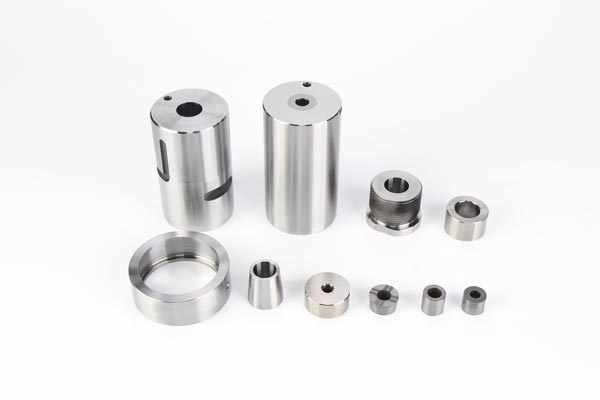
Tungsten carbide offers exceptional wear resistance, thermal stability, and compressive strength, making it the preferred material for high-stress industrial tooling and wear components. However, its hardness—typically ranging between 85 and 92 HRA—presents severe manufacturing challenges. Standard cutting tools fail quickly against its dense structure. Achieving sub-micron accuracy through precision carbide machining requires specialized abrasive techniques, thermal erosion methods, and strict ambient control to prevent thermal cracking and material degradation.
Primary Methods in Precision Carbide Machining
방전 가공(EDM)
EDM removes material through controlled spark erosion rather than mechanical shear. Because electrical discharge machining operates without contact, it eliminates cutting pressure on thin walls and fragile geometries.
당사의 공장 사업: 초경 부품, 금형 부품, 의료용 사출 금형, 정밀 사출 금형, 테플론 PFA 사출 성형, PFA 튜브 피팅. 이메일: [email protected],whatsapp:+8613302615729.
- Wire EDM: Achieves path accuracy within ±0.001 mm, cutting complex dies, punches, and narrow internal slots.
- Sinker EDM: Handles blind cavities, thread features, and 3D shapes. Success depends on selecting carbide grades with sufficient metallic binder to maintain uniform electrical conductivity.
Diamond Wheel Grinding
Grinding remains the primary process for establishing precise external dimensions and ultra-smooth surface finishes on carbide parts. Modern CNC grinding systems use resinoid, vitrified, or metal-bonded diamond wheels. Maintaining consistent wheel dressing, optimized spindle speeds, and flood coolant delivery prevents thermal shock and micro-chipping. This process routinely achieves surface roughness values below Ra 0.1 µm.
Precision CNC Milling with Ultrahard Tooling
Polycrystalline Diamond (PCD) and Chemical Vapor Deposition (CVD) diamond tools allow direct CNC milling on pre-sintered or specialized hardened carbide grades. Direct milling cuts cycle times significantly by replacing multiple grinding passes on complex contours. This method demands high machine rigidity and active vibration damping to prevent edge chipping.
Laser Micromachining
Short-pulse ultrafast lasers (femtosecond and picosecond) ablate carbide instantly without transferring heat to surrounding material. This non-contact approach cuts micro-holes and complex surface textures without mechanical tool wear, offering high efficiency for medical and micro-electronic components.
Quality Standards and Environmental Control
Sub-micron tolerances require continuous environmental control. Temperature shifts cause thermal expansion that alters measurements during machining and inspection.
- Climate Control: Machining cells and quality labs maintain a constant ambient temperature of 20°C (±0.5°C).
- Coolant Management: Chilled, filtered synthetic coolants flush swarf immediately and stabilize workpiece temperature.
- Verification Systems: Coordinate measuring machines (CMM), optical profilometers, and ultrasonic testing verify dimensional compliance and internal structural integrity.
Industrial Applications and Commercial Impact
High-precision carbide components serve demanding operating environments across major sectors:
- Tooling and Stamping: Progressive stamping dies, cold-heading punches, and wire-drawing dies.
- Energy Sector: High-pressure valve seats, flow trim components, and downhole drilling inserts.
- Medical Equipment: Surgical cutting blades, micro-punches, and fluid control nozzles.
- Aerospace and Automotive: Wear plates, fuel injection components, and precision metering pumps.
By extending component service life up to ten times compared to hardened steel, components crafted through precision carbide machining lower long-term operating costs, minimize unscheduled downtime, and stabilize high-volume production lines.
Frequently Asked Questions
What factors dictate whether to use Wire EDM or Diamond Grinding for carbide parts?
Wire EDM suits complex internal geometry, narrow slots, and thin walls where mechanical grinding force causes part deflection. Diamond grinding works best for external cylindrical profiles, flat reference planes, and applications requiring low surface roughness without heat-affected erosion layers.
How do operators prevent micro-cracking during carbide grinding?
Operators prevent thermal micro-cracking by applying high-pressure flood coolant directly to the grinding zone, selecting open-structure diamond wheels for rapid heat dissipation, and controlling depth-of-cut per pass.
Can fully sintered tungsten carbide be machined with conventional carbide tooling?
No. Fully sintered tungsten carbide matches or exceeds the hardness of conventional carbide tools. Processing hardened carbide requires superabrasive diamond tooling, EDM erosion, or laser ablation.
 English
  Deutsch
  Français
  日本語
日本語  한국어
한국어  Español
  Português
  Italiano
  Nederlands
  Русский
  Bahasa Indonesia
  العربية