

Strategies and Practices for Improving the Processing Efficiency of Tungsten Carbide Dies
I. Introduction In the landscape of modern manufacturing, tungsten carbide dies hold a pivotal position as indispensable tools that drive industry development. The processing efficiency of these dies is akin […]
I. 소개
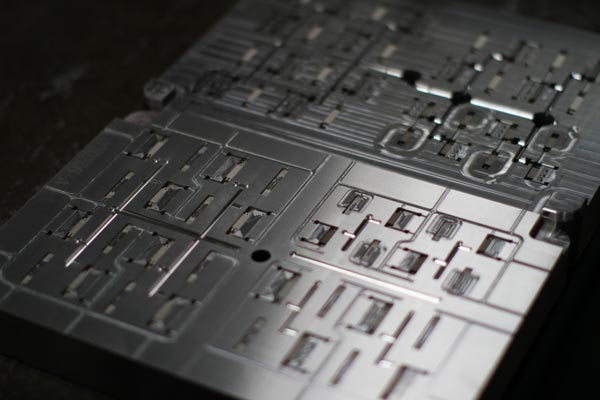
In the landscape of modern manufacturing, tungsten carbide dies hold a pivotal position as indispensable tools that drive industry development. The processing efficiency of these dies is akin to a crucial gear in a company’s production chain, directly determining production benefits and market competitiveness. With the rapid advancement of the manufacturing sector, enhancing the processing efficiency of tungsten carbide dies has emerged as a core topic of concern across the industry. This article will delve into strategies and practices for improving the processing efficiency of tungsten carbide dies from multiple dimensions, including process optimization, technological innovation, equipment upgrading, and management enhancement, providing practical guidance for enterprises.
II. Process Optimization Strategies
1. Cutting Parameter Optimization
Cutting parameters are key variables that significantly influence the processing efficiency of tungsten carbide dies. Optimizing parameters such as cutting speed, feed rate, and cutting depth is akin to precisely adjusting the operational rhythm of a machine. It can effectively reduce cutting forces, cutting heat, and tool wear, thereby improving processing quality and efficiency. In practical operations, it is essential to comprehensively consider the unique properties of tungsten carbide materials, the complex structure of the dies, and processing requirements, while also taking into account the performance characteristics of the machine tool to conduct meticulous optimization and adjustment of cutting parameters, ensuring that each parameter reaches an optimal matching state.
당사의 공장 사업: 초경 부품, 금형 부품, 의료용 사출 금형, 정밀 사출 금형, 테플론 PFA 사출 성형, PFA 튜브 피팅. 이메일: [email protected],whatsapp:+8613302615729.
2. Machining Path Optimization
Optimizing the machining path is another important approach to enhancing processing efficiency. During the programming phase, leveraging advanced CAM software to conduct comprehensive simulations and in-depth optimizations of the machining path ensures that the path is both reasonable and highly efficient. Simultaneously, based on the geometric shape of the die and processing requirements, carefully plan the cutting sequence and processing methods, akin to drawing a precise navigation map for die processing, to further shorten processing time and minimize unnecessary procedural waste.
3. Tool Selection and Optimization
The selection and optimization of tools play a decisive role in improving the processing efficiency of tungsten carbide dies. When selecting tools, it is crucial to closely align with the material, structure, and processing requirements of the die to choose the most suitable tool types and specifications. Additionally, establish a strict tool wear inspection and replacement system, regularly inspect the tools to ensure they remain sharp and guarantee processing quality. In terms of tool geometry and edge design, actively introduce advanced tool technologies and coating technologies, akin to equipping tools with a sturdy armor, significantly enhancing tool wear resistance and processing efficiency.
III. Technological Innovation Strategies
1. Introduction of Advanced Processing Technologies
With the continuous evolution of manufacturing technologies, new processing technologies are emerging like bamboo shoots after a rain. Actively introducing advanced technologies such as high-speed cutting, laser processing, and electrical discharge machining is like injecting a powerful impetus into enterprises, significantly improving the processing efficiency of tungsten carbide dies. These advanced technologies offer numerous advantages, including fast processing speed, high precision, and excellent quality, akin to precise surgical knives, effectively shortening processing cycles and reducing production costs, enabling enterprises to gain a competitive edge in the market.
2. Application of Digital Manufacturing Technologies
Digital manufacturing technologies represent the integration of traditional manufacturing technologies with modern information technologies. By applying these technologies, rapid design and manufacturing of tungsten carbide dies can be achieved, substantially enhancing processing efficiency and quality. For example, utilizing CAD/CAM/CAE technologies for die design and simulation analysis is like conducting a comprehensive “physical examination” of the die in a virtual world, enabling early detection of design errors and reducing modification time. Adopting 3D printing technology for rapid prototyping and verification of dies can quickly transform design concepts into physical objects, shortening product development cycles and reducing R&D costs.
3. Research and Development of New Tungsten Carbide Materials
The performance of tungsten carbide materials directly impacts the processing efficiency and service life of dies. Intensifying R&D efforts to develop new tungsten carbide materials such as nano-tungsten carbide and composite tungsten carbide is like endowing dies with more powerful “genes,” improving material hardness, wear resistance, and thermal stability, thereby enhancing die processing efficiency and service life. Simultaneously, by optimizing the chemical composition and microstructure of materials, the performance stability and processing adaptability of materials can be further enhanced, providing superior material support for die processing.
IV. Equipment Upgrading Strategies
1. Introduction of High-Precision Machine Tools
High-precision machine tools are core equipment for improving the processing efficiency of tungsten carbide dies. Introducing high-precision machine tools such as five-axis联动 (five-axis simultaneous) machining centers and high-speed cutting machine tools is like equipping enterprises with a series of precision “processing weapons,” enabling high-precision and high-efficiency processing to meet the processing requirements of high-precision dies. Moreover, high-precision machine tools can effectively reduce processing errors and surface roughness, improving die processing quality and stability, enabling enterprises to produce higher-quality die products.
2. Upgrading of CNC Systems
The CNC system serves as the “brain” of machine tools and plays a crucial role in improving processing efficiency. Upgrading the CNC system by adopting advanced control algorithms and processing strategies is like upgrading the “brain” of machine tools, enhancing machine tool processing precision and stability while reducing processing errors and fault rates. Furthermore, new CNC systems are equipped with remote monitoring and fault diagnosis functions, akin to installing a pair of “all-seeing eyes” for enterprise equipment, enabling real-time monitoring of equipment operational status, timely detection, and resolution of problems, and improving equipment maintenance and management efficiency.
3. Equipping with Intelligent Inspection Equipment
Intelligent inspection equipment acts as a vital line of defense for ensuring the processing quality of tungsten carbide dies. Equipping online measuring instruments, visual inspection systems, and other intelligent inspection equipment enables real-time inspection and feedback of die processing quality, akin to assigning a strict “quality inspector” to the processing process, ensuring processing stability and quality. Additionally, intelligent inspection equipment can achieve automatic data collection and analysis functions, providing powerful data support for optimizing the processing process and helping enterprises continuously improve processing techniques and enhance processing efficiency.
V. Management Enhancement Strategies
1. Strengthening Personnel Training and Management
The skill level and management capabilities of operators are important guarantees for improving the processing efficiency of tungsten carbide dies. Strengthening personnel training and management to enhance operators’ skill levels and safety awareness is like building a high-quality “processing team” for enterprises, reducing the impact of human factors on processing efficiency. Simultaneously, establishing a comprehensive performance evaluation and incentive mechanism is like injecting a powerful motivator into enterprise employees, stimulating operators’ enthusiasm and creativity to further improve processing efficiency.
2. Implementing Lean Production Concepts
Lean production concepts represent a production approach that pursues maximum production efficiency and minimum costs. Implementing lean production concepts by optimizing production processes, reducing waste, and improving resource utilization efficiency is like conducting a comprehensive “slimming operation” for enterprise production, further enhancing the processing efficiency of tungsten carbide dies. Moreover, lean production concepts can improve enterprise market competitiveness and sustainable development capabilities, laying a solid foundation for the long-term development of enterprises.
VI. 결론
Improving the processing efficiency of tungsten carbide dies is a systematic and complex project that requires coordinated efforts from multiple aspects, including process optimization, technological innovation, equipment upgrading, and management enhancement. By adopting scientific and reasonable strategies and practical measures, enterprises can significantly improve the processing efficiency and quality level of tungsten carbide dies, standing out in fierce market competition and providing strong support for sustainable development.
FAQ
Q1: How can the optimal cutting speed, feed rate, and cutting depth be determined during cutting parameter optimization?
A1: It is necessary to comprehensively consider the properties of tungsten carbide materials, die structure, processing requirements, and machine tool performance characteristics. Relevant information can be consulted, and test cuts can be conducted. The parameters can be gradually adjusted based on the processing results to find the optimal combination.
Q2: What factors should enterprises consider when introducing advanced processing technologies?
A2: Enterprises should consider factors such as technology costs, equipment investment, the difficulty of personnel training, compatibility with existing production processes, and whether the technology can truly improve processing efficiency and product quality.
Q3: After upgrading the CNC system, how can enterprises ensure that operators can quickly adapt to the new system?
A3: Enterprises should organize professional training to familiarize operators with the operation interface, functions, and usage methods of the new system. Additionally, provide detailed operation manuals and online technical support to help operators solve practical problems.
Q4: What resistances might be encountered during the implementation of lean production concepts, and how can they be overcome?
A4: Resistances such as employee resistance and difficulties in inter-departmental collaboration might be encountered. This can be addressed by strengthening publicity and training to make employees understand the benefits of lean production. Establish cross-departmental collaboration mechanisms to enhance communication and coordination and jointly promote lean production.
관련 게시물
- Safety Specifications and Operation Guidelines for the Use of Tungsten Carbide Dies
- Practical Tips for P prolonging the Service Life of Tungsten Carbide Dies
- Manufacturing Process and Optimization Strategies of Tungsten Carbide Die
- In-depth Analysis of Key Steps in the Manufacturing Process of Tungsten Carbide Dies




 English
  Deutsch
  Français
  日本語
日本語  한국어
한국어  Español
  Português
  Italiano
  Nederlands
  Русский
  Bahasa Indonesia
  العربية