

Temperature Control Technologies for Tungsten Carbide Dies: A Comprehensive Overview
1. Introduction In the die manufacturing industry, mold temperature control is a critical process factor that directly determines product quality, production efficiency, and manufacturing cost. Tungsten carbide dies, in particular, […]
1. Introduction
In the die manufacturing industry, mold temperature control is a critical process factor that directly determines product quality, production efficiency, and manufacturing cost. Tungsten carbide dies, in particular, demand far stricter temperature control precision and stability due to their high hardness and superior wear resistance. The selection and implementation of temperature control solutions have a direct impact on die performance and service life. This article systematically reviews the main technology paths for tungsten carbide die temperature control, analyzes their technical characteristics and applicable scenarios, and provides professional reference for industry practitioners.
2. Main Types of Temperature Control Technologies for Tungsten Carbide Dies
2.1 Fluid Temperature Control Technology
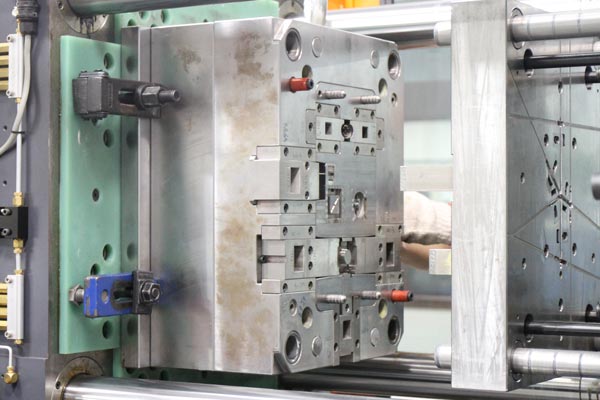
This technology achieves indirect temperature control by adjusting parameters such as coolant flow rate, temperature, and pressure. In tungsten carbide die applications, pressurized water or thermal oil is commonly used as the heat transfer medium. This approach offers high control precision, fast response, and straightforward operation, meeting the temperature control requirements of most working conditions.
당사의 공장 사업: 초경 부품, 금형 부품, 의료용 사출 금형, 정밀 사출 금형, 테플론 PFA 사출 성형, PFA 튜브 피팅. 이메일: [email protected],whatsapp:+8613302615729.
(1) Pressurized Water Cooling Technology
Pressurized water cooling delivers chilled water to the die cooling system via a high-pressure pump. By adjusting the pump speed and valve opening, the water flow rate and pressure are regulated, thereby controlling the die temperature. This technology features high cooling efficiency and energy-saving benefits. However, it is essential to ensure that all hoses and manifolds are rated for the required pressure and temperature to guarantee stable long-term operation.
(2) Thermal Oil Heating Technology
Thermal oil heating is suited for die applications requiring elevated temperatures. A thermal oil pump circulates heated oil through the die heating system, with oil temperature and flow rate regulated by adjusting pump speed and heater output. This technology delivers uniform heating and stable temperature control. However, the oil temperature must be maintained within a defined range to prevent thermal shock damage to the tungsten carbide die.
2.2 Direct Die Temperature Control Technology
This technology embeds temperature sensors directly inside the die to measure the actual die temperature in real time, with a controller making precise adjustments based on the readings. It offers superior control accuracy and rapid response, making it ideal for applications with stringent temperature requirements.
(1) Thermocouple Temperature Measurement Technology
Thermocouple measurement involves installing thermocouples at critical locations within the die to capture real-time temperature data and transmit signals to the controller. The controller compares the measured value against the setpoint and automatically adjusts the output power of the heating or cooling device, achieving closed-loop precise temperature control. This technology provides high measurement accuracy and fast response. However, the placement and quantity of thermocouples must be carefully designed according to the specific die geometry.
(2) Infrared Temperature Measurement Technology
Infrared temperature measurement is a non-contact method based on infrared radiation principles. It detects the infrared energy emitted from the die surface and calculates the actual temperature indirectly. This technology offers fast measurement speed and eliminates the need for physical contact with the die surface. However, it is significantly affected by surface material, color, and roughness, requiring calibration and correction for reliable results.
2.3 Combined Control Technology
Combined control technology integrates both fluid temperature control and direct temperature control methods to achieve the highest level of temperature precision. It delivers superior control accuracy, fast response, and strong adaptability, making it especially suitable for high-end manufacturing scenarios with extremely demanding temperature requirements.
3. Core Value of Temperature Control Technologies in Tungsten Carbide Dies
Improving Product Quality
Precise temperature control effectively suppresses thermal deformation and wear of tungsten carbide dies, ensuring dimensional accuracy and operational stability. At the same time, proper temperature management improves surface quality and internal structure of the molded parts, enhancing their mechanical properties and service life.
Increasing Production Efficiency
Scientific temperature control strategies significantly shorten cooling time and molding cycle duration, boosting output per unit time. For high-precision, high-standard products, the application of temperature control technology delivers notable improvements in both efficiency and quality.
Reducing Overall Costs
Optimized temperature control reduces energy consumption and scrap rates, directly lowering manufacturing costs. Additionally, a stable thermal environment extends the service life of tungsten carbide dies, reducing maintenance and replacement frequency and further controlling long-term operational expenses.
4. Conclusion
Temperature control technology is a key process enabler for achieving high quality, high efficiency, and low cost in tungsten carbide die manufacturing. The three main technology paths — fluid temperature control, direct temperature control, and combined control — each offer distinct advantages. In practice, the selection should be based on a comprehensive assessment of die structure characteristics and production requirements, with continuous optimization of the control system to maximize die performance and production benefits.


 English
  Deutsch
  Français
  日本語
日本語  한국어
한국어  Español
  Português
  Italiano
  Nederlands
  Русский
  Bahasa Indonesia
  العربية