

Analysis of Tungsten Carbide Die Fracture Causes and Prevention Strategies
I. Introduction In the fields of precision machining and die manufacturing, tungsten carbide dies are widely used in various high-precision applications due to their outstanding properties, including high hardness, high […]
I. 소개
In the fields of precision machining and die manufacturing, tungsten carbide dies are widely used in various high-precision applications due to their outstanding properties, including high hardness, high wear resistance, and excellent thermal stability. However, fracture remains a core issue that constrains their service life and production efficiency. Die fracture not only leads to production line downtime and delivery delays but may also cause equipment damage and significant economic losses. Therefore, a systematic analysis of fracture causes and the development of targeted preventive measures hold practical value for improving die reliability and production safety.
당사의 공장 사업: 초경 부품, 금형 부품, 의료용 사출 금형, 정밀 사출 금형, 테플론 PFA 사출 성형, PFA 튜브 피팅. 이메일: [email protected],whatsapp:+8613302615729.
II. Primary Causes of Tungsten Carbide Die Fracture
Material Factors
(1) Uneven composition: If composition control is improper during the smelting process of tungsten carbide materials, internal defects such as porosity and inclusions may occur. These defects serve as stress concentration points under load and become potential triggers for fracture.
(2) Insufficient toughness: Although tungsten carbide offers high hardness, its toughness is relatively limited. When subjected to impact loads or alternating stresses, the material tends to undergo brittle fracture.
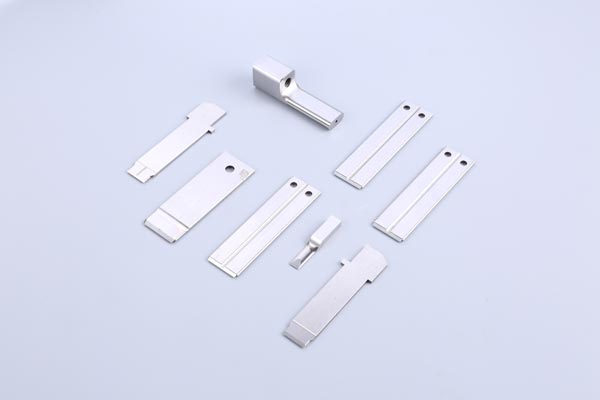
Design Factors
(1) Unreasonable structural design: If the mechanical properties of the material and actual processing conditions are not fully evaluated during the design phase, the die may be subjected to stresses or strains beyond its capacity during operation, leading to fracture.
(2) Insufficient dimensional accuracy: Dimensional accuracy directly affects the die’s fit and performance. Inadequate precision can cause issues such as material jamming and misalignment, which intensify local stress and ultimately induce fracture.
Manufacturing Process Factors
(1) Improper heat treatment: Heat treatment is a critical process for improving the performance of tungsten carbide dies. If parameters such as temperature and duration are not properly controlled, uneven internal microstructure and excessive residual stress may result, significantly increasing fracture risk.
(2) Insufficient machining accuracy: Substandard machining accuracy can lead to stress concentration and fatigue cracks on the die surface and internally, shortening its service life.
Usage and Maintenance Factors
(1) Improper usage: Non-compliant operation or unreasonably set processing parameters may subject the die to excessive stress or strain, accelerating fracture.
(2) Inadequate maintenance: Poor lubrication, incomplete cleaning, and other maintenance neglect can accelerate surface wear and increase internal stress, eventually leading to fracture.
III. Key Preventive Measures for Tungsten Carbide Die Fracture
Optimize Material Selection
(1) Select high-quality tungsten carbide materials with uniform composition and reliable quality to reduce the impact of internal defects on die performance.
(2) Reasonably adjust the material composition based on actual service conditions to balance toughness and wear resistance, enhancing overall performance.
Optimize Die Design
(1) Fully consider the material’s mechanical properties and processing conditions during design, and plan the die structure reasonably to reduce working stress.
(2) Improve dimensional accuracy by adopting high-precision inspection methods to prevent material jamming and misalignment.
Improve Manufacturing Processes
(1) Optimize heat treatment parameters to improve the material’s microstructure and properties, reduce residual stress, and enhance toughness and wear resistance.
(2) Adopt advanced machining technologies and equipment to improve machining accuracy and surface quality, reducing stress concentration and fatigue crack formation.
Strengthen Usage and Maintenance Management
(1) Establish standardized operating procedures and guidelines to ensure operators use the die correctly and avoid fracture caused by operational errors.
(2) Implement a regular maintenance regime covering lubrication, cleaning, and fastening to keep the die in optimal working condition and reduce the risk of wear and stress concentration.
(3) Establish a die usage archive management system to record usage history and maintenance logs, enabling timely identification and resolution of potential issues.
IV. 결론
Fracture of tungsten carbide dies is a key factor affecting their service life and performance stability. Through systematic measures including material optimization, design improvement, process enhancement, and strengthened usage and maintenance management, the fracture risk can be effectively reduced, ensuring safe and reliable die operation. In practical applications, preventive strategies should be flexibly adjusted according to specific conditions to achieve optimal results.
관련 게시물
- Systematic Strategies and Practical Pathways for Extending Tungsten Carbide Die Service Life
- Environmental Impact and Sustainability of Tungsten Carbide Die Materials
- Temperature Control Technologies for Tungsten Carbide Dies: A Comprehensive Overview
- What Are the Common Methods for Tungsten Carbide Mold Precision Inspection



 English
  Deutsch
  Français
  日本語
日本語  한국어
한국어  Español
  Português
  Italiano
  Nederlands
  Русский
  Bahasa Indonesia
  العربية