

How to Effectively Control Cutting Forces in Tungsten Carbide Dies: Key Strategies and Practical Guide
1. Introduction Tungsten carbide dies are widely used in industrial manufacturing due to their exceptional high hardness, superior wear resistance, and excellent thermal stability. However, during the machining process of […]
1. Introduction
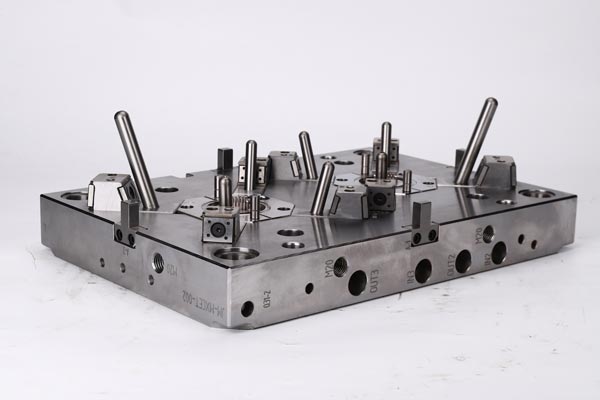
Tungsten carbide dies are widely used in industrial manufacturing due to their exceptional high hardness, superior wear resistance, and excellent thermal stability. However, during the machining process of tungsten carbide dies, the magnitude of cutting forces directly determines machining efficiency, machining accuracy, and the final service life of the die. Therefore, systematically mastering and effectively controlling cutting forces in tungsten carbide die machining is of profound practical significance for improving die machining quality and reducing overall machining costs. This article provides an in-depth exploration of cutting force control methods and best practices from the core dimensions of cutting parameter optimization, tooling selection strategies, workpiece material pretreatment, scientific application of cutting fluids, and machine tool performance assurance.
2. Systematic Optimization of Cutting Parameters
Cutting parameters are the primary factors influencing cutting forces and require coordinated optimization across three dimensions: cutting speed, feed rate, and depth of cut.
La nostra attività in fabbrica: parti in metallo duro, parti di stampi, stampi a iniezione medicali, stampi a iniezione di precisione, stampaggio a iniezione di teflon PFA, raccordi per tubi PFA. e-mail: [email protected],whatsapp:+8613302615729.
Cutting Speed
Cutting speed refers to the relative motion rate of the tool with respect to the workpiece. For tungsten carbide die machining, the selection of cutting speed is critically important. Excessively high cutting speed leads to a sharp increase in cutting forces, accelerates tool wear, and induces thermal deformation of the workpiece. Conversely, excessively low cutting speed significantly reduces machining efficiency. Therefore, the cutting speed range should be scientifically determined based on the hardness and toughness characteristics of the tungsten carbide material to effectively reduce cutting forces while ensuring machining quality.
Feed Rate
Feed rate refers to the displacement of the tool relative to the workpiece per revolution or per stroke. The magnitude of the feed rate has a direct impact on both cutting forces and machining quality. An excessively large feed rate causes cutting forces to rise sharply, adversely affecting machining accuracy and surface quality. An excessively small feed rate, on the other hand, constrains machining efficiency. It is recommended to set the feed rate appropriately according to the specific machining requirements of the tungsten carbide die to achieve precise control of cutting forces.
Depth of Cut
Depth of cut refers to the maximum depth to which the tool penetrates the workpiece. While a greater depth of cut can improve material removal rate, it also substantially increases cutting forces and causes greater mechanical damage to both the tool and the workpiece. Therefore, during tungsten carbide die machining, an appropriate depth of cut should be selected based on actual working conditions to achieve the optimal balance between machining efficiency and cutting forces.
3. Tooling Selection Strategies
Tool Material
The selection of tool material is a core element in controlling cutting forces during tungsten carbide die machining. Due to the extremely high hardness and wear resistance of tungsten carbide materials, tool materials with equal or superior hardness and wear resistance must be selected, such as ultra-fine grain cemented carbide, ceramic tools, or cubic boron nitride (CBN) tools. These high-performance tool materials maintain stable cutting performance throughout the machining process, effectively reducing cutting forces.
Tool Geometry Parameters
Tool geometry parameters, including rake angle, clearance angle, and edge radius, also have a significant impact on cutting forces. Rational tool geometry design can effectively reduce friction and cutting forces during the machining process. For tungsten carbide die machining, it is recommended to select tools with a larger rake angle, a smaller clearance angle, and an appropriate edge radius to minimize cutting forces while maximizing machining quality.
4. Workpiece Material Pretreatment Techniques
Preheating Treatment
Preheating the tungsten carbide die before machining can moderately reduce the material’s hardness and internal stress, thereby effectively decreasing cutting forces. The preheating process typically includes heating, holding, and controlled cooling stages. The preheating temperature and holding time should be precisely controlled according to the material’s specific performance characteristics and machining requirements.
Trattamento della superficie
Surface treatment of tungsten carbide dies, such as sandblasting and precision polishing, can significantly reduce surface roughness and microscopic irregularities, thereby decreasing friction and cutting forces during machining. At the same time, high-quality surface treatment also enhances the surface quality and wear resistance of the die.
5. Scientific Application of Cutting Fluids
Cutting fluids play an irreplaceable role in tungsten carbide die machining. High-quality cutting fluids can effectively reduce the temperature in the cutting zone, decrease the friction coefficient and cutting forces, and improve both machining efficiency and surface quality. When selecting cutting fluids, key performance indicators such as cooling capability, lubricity, and rust prevention should be comprehensively evaluated. The appropriate cutting fluid type and concentration should be selected based on specific machining conditions and process requirements.
6. Machine Tool Performance Assurance
The rigidity and stability of the machine tool also have a significant impact on cutting forces in tungsten carbide die machining. High-performance machine tools possess superior structural rigidity and dynamic stability, enabling them to maintain excellent machining accuracy and operational stability throughout the process, thereby effectively suppressing abnormal fluctuations in cutting forces. Therefore, when machining tungsten carbide dies, priority should be given to high-end machine tool equipment with sufficient rigidity and stability, and the machine tool should always be maintained in optimal working condition.
7. Real-Time Monitoring of the Machining Process
During the machining process, a real-time monitoring mechanism for cutting forces should be established. By continuously monitoring cutting force data and its trend changes, operators can promptly adjust cutting parameters, replace worn tools, or take other intervention measures to keep cutting forces within a reasonable range. Furthermore, leveraging modern sensor technology and information management systems enables intelligent monitoring and refined management of the machining process, further enhancing machining efficiency and product quality.
8. Conclusion
Controlling cutting forces in tungsten carbide die machining is a key approach to improving die machining quality and reducing overall machining costs. Through systematic optimization of cutting parameters, scientific tooling and material selection, workpiece pretreatment, rational application of cutting fluids, machine tool performance assurance, and real-time process monitoring, cutting forces can be effectively reduced while significantly improving machining efficiency and quality. In actual production, it is recommended to comprehensively evaluate all relevant factors based on specific working conditions and adopt targeted cutting force control measures to achieve optimal die machining results.
Messaggi correlati
- Common Methods for Stress Relief of Tungsten Carbide Dies and Their Application Guidelines
- Core Strategies and Practical Techniques for Improving Tungsten Carbide Die Machining Efficiency
- Systematic Management and Best Practices for Daily Maintenance of Tungsten Carbide Dies
- Tungsten Carbide Die Precision Inspection: Methods, Standards, and Practical Applications




 English
  Deutsch
  Français
  日本語
日本語  한국어
한국어  Español
  Português
  Italiano
  Nederlands
  Русский
  Bahasa Indonesia
  العربية