

A Comprehensive Analysis of the Heat Treatment Process for Tungsten Carbide Dies
In the field of industrial production, tungsten carbide dies are indispensable key tools in numerous production processes due to their excellent high hardness, high strength, and outstanding wear resistance. To […]
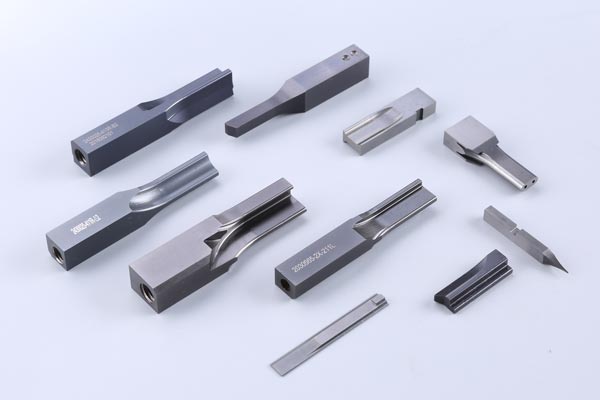
In the field of industrial production, tungsten carbide dies are indispensable key tools in numerous production processes due to their excellent high hardness, high strength, and outstanding wear resistance. To further tap into the performance potential of tungsten carbide dies, the heat treatment process is of crucial importance. Heat treatment can precisely regulate the internal structure of the material, thereby optimizing its physical and mechanical properties. This article will provide a comprehensive and in-depth explanation of the heat treatment process for tungsten carbide dies and emphasize the key points that need to be closely monitored during the process.
I. Pre – heat treatment: meticulous preparation lays a solid foundation
Before initiating the heat treatment process, a comprehensive and detailed inspection of the tungsten carbide die is the top priority. It is essential to ensure that there are no obvious defects on the die’s surface, that the internal structure is uniform, and that there is no excessive internal stress. Meanwhile, the die should be thoroughly cleaned to remove any oil stains and impurities attached to the surface. This ensures uniform heating and cooling during the heat treatment process, preventing performance degradation caused by uneven local heating or cooling differences.
Our factory business: carbide parts, mold parts, medical injection molds, precision injection molds, teflon PFA injection molding, PFA tube fittings. email: [email protected],whatsapp:+8613302615729.
In addition, the pre – heat treatment preparations also include the careful selection of heat treatment equipment and process parameters. Based on the material characteristics, shape, size, and expected performance requirements of the tungsten carbide die, key parameters such as heating temperature, holding time, and cooling method should be precisely determined to lay a solid foundation for the smooth progress of subsequent heat treatment procedures.
II. Annealing treatment: eliminating internal problems and enhancing toughness
Annealing, as the first key step in the heat treatment of tungsten carbide dies, aims to eliminate internal stress within the die, reduce internal defects, and significantly improve the material’s plasticity and toughness. During the annealing process, the tungsten carbide die is slowly heated to an appropriate temperature (usually around 800°C) and held at this temperature for a sufficient period to promote the uniform distribution of carbon elements and other alloy elements within the material.
Strict control of the heating rate and temperature distribution is of utmost importance during this process. Excessive heating speed or uneven temperature distribution should be avoided to prevent the generation of excessive thermal stress and non – uniform tissue. At the same time, the cooling rate after annealing also needs to be precisely controlled to prevent internal cracks caused by rapid cooling, ensuring the stability and uniformity of the die’s internal structure.
III. Normalizing treatment: optimizing structure and strengthening properties
After the annealing treatment, the tungsten carbide die enters the normalizing treatment stage. The main function of normalizing is to adjust the material’s tissue structure and enhance its hardness and strength. During the normalizing process, the die is heated to the normal quenching temperature range (usually higher than the annealing temperature) and held for a certain period to fully austenitize the material.
Compared with annealing, the cooling rate after normalizing is relatively faster, usually through natural cooling in the air. This cooling method helps to refine the grains and improve the comprehensive mechanical properties of the material, enabling the die to maintain a good balance between high hardness, toughness, and strength.
IV. Quenching treatment: rapid cooling to forge a hard core
Quenching is the core step in the heat treatment of tungsten carbide dies and also the key to determining the die’s performance. Its fundamental principle is to rapidly cool the material, causing the austenite to transform into martensite, thereby significantly improving the material’s hardness and wear resistance.
During the quenching process, the tungsten carbide die is quickly heated to the quenching temperature (usually higher than the normalizing temperature) and then immediately immersed in water, oil, or other quenching media for cooling. The selection of the quenching medium should comprehensively consider the die’s material, size, and performance requirements to ensure a balance between the cooling effect and the die’s quality.
Cracking or deformation of the die during quenching is a major issue that requires special attention. To address this, effective measures such as preheating, slow cooling, and step quenching can be taken to reduce quenching stress and minimize the risk of deformation, ensuring that the die maintains good dimensional accuracy and structural integrity after quenching.
V. Tempering treatment (optional): balancing properties and stabilizing tissue
In some specific cases, to further improve the toughness of the tungsten carbide die and reduce internal stress, tempering treatment can be carried out after quenching. The main purpose of tempering is to stabilize the tissue structure, eliminate the internal stress generated during quenching, and precisely adjust the balance between the material’s hardness and toughness.
During the tempering process, the die is heated to a specific temperature lower than the quenching temperature and held for a certain period, followed by slow cooling. The selection of the tempering temperature and time should be precisely adjusted according to the required performance. Generally, a higher tempering temperature results in better toughness of the material but a corresponding decrease in hardness, so a reasonable choice should be made based on actual usage requirements.
VI. Post – heat treatment: strict inspection to ensure quality
After the heat treatment is completed, a comprehensive and strict inspection and evaluation of the tungsten carbide die are indispensable. The inspection covers multiple aspects such as the die’s surface quality, dimensional accuracy, and mechanical properties. By comparing the performance changes before and after heat treatment, the effectiveness of the heat treatment can be accurately evaluated, providing a reliable basis for subsequent production applications.
At the same time, it is also crucial to conduct in – depth analysis and effective prevention of potential defects that may occur during the heat treatment process. Problems such as overheating, over – burning, decarburization, and cracking can all lead to a decline or even failure of the die’s performance. Therefore, strict control of process parameters and enhanced process monitoring are required during the heat treatment process to ensure that the die’s quality meets high – standard requirements.
VII. Summary and outlook: innovation – driven, leading the future
The heat treatment process of tungsten carbide dies is a highly complex and precise technological system involving multiple steps and precise control of parameters. Through scientific and reasonable heat treatment process design and rigorous implementation, the hardness and wear resistance of tungsten carbide dies can be significantly improved, their service life effectively extended, and production efficiency greatly enhanced, creating significant economic benefits for enterprises.
With the continuous progress of science and technology and the rapid development of industry, the heat treatment technology of tungsten carbide dies is facing unprecedented innovation opportunities. In the future, we can expect the emergence of more intelligent, efficient, and environmentally friendly heat treatment equipment and process methods, bringing greater convenience and benefits to industrial production. Meanwhile, with the continuous breakthroughs in new materials and technologies, the performance and application fields of tungsten carbide dies will also be further expanded and upgraded, playing a key role in more high – end manufacturing fields and driving industrial manufacturing to a higher level.
Related Posts
- How to Effectively Prevent the Sticking Phenomenon of Tungsten Carbide Dies
- Comprehensive Analysis of Prevention Strategies for Adhesion Phenomenon in Tungsten Carbide Dies
- How to Accurately Determine Whether a Tungsten Carbide Die Needs Replacement?
- In – depth Analysis of the Impact of Polishing Treatment on the Performance of Tungsten Carbide Dies




 English
  Deutsch
  Français
  日本語
日本語  한국어
한국어  Español
  Português
  Italiano
  Nederlands
  Русский
  Bahasa Indonesia
  العربية