

Comprehensive Analysis of Prevention Strategies for Adhesion Phenomenon in Tungsten Carbide Dies
In the field of industrial production, tungsten carbide dies, with their excellent characteristics such as high hardness, high strength, and good wear resistance, have become indispensable key tools in numerous […]
In the field of industrial production, tungsten carbide dies, with their excellent characteristics such as high hardness, high strength, and good wear resistance, have become indispensable key tools in numerous manufacturing processes. They are widely applied in various industries including automobile manufacturing, aerospace, and electronic equipment, playing a pivotal role in ensuring product quality and enhancing production efficiency. However, in actual production, the adhesion phenomenon has always been a common and vexing problem for enterprises. Adhesion not only accelerates the wear of the die, significantly shortening its service life and increasing die replacement costs, but also leads to defects on the product surface such as scratches and burrs, seriously affecting product quality and reducing the product pass rate. Moreover, frequent stops to deal with the adhesion problem can disrupt the production rhythm, lower production efficiency, and thereby increase overall production costs. To effectively solve this problem, this article will conduct an in-depth analysis of the causes of the adhesion phenomenon and propose a set of comprehensive and systematic prevention measures to help enterprises better maintain and use tungsten carbide dies and achieve maximum production benefits.
I. In-depth Analysis of the Root Causes of the Adhesion Phenomenon
The adhesion phenomenon is essentially a complex physicochemical reaction that occurs between the die surface and the processed material under specific conditions, mainly manifested as the softening of the material and its adhesion to the die surface. During high-speed cutting or stamping processes, intense friction between the die and the material generates high temperatures at the contact surface instantaneously, causing the material to reach its softening point or even melt and then adhere to the die surface. In addition, various factors such as the surface roughness of the die, lubrication conditions, and the properties of the material itself interact and also have a significant impact on the occurrence and development of the adhesion phenomenon. Specifically, the following aspects are the key factors leading to the adhesion phenomenon:
Our factory business: carbide parts, mold parts, medical injection molds, precision injection molds, teflon PFA injection molding, PFA tube fittings. email: [email protected],whatsapp:+8613302615729.
(I) Excessive Surface Roughness of the Die
The surface roughness of the die is an important indicator for measuring the microscopic geometric shape errors of the die surface. When the surface roughness of the die is too high, there are a large number of tiny protrusions and pits on its surface. These irregular structures increase the contact area between the die and the material, making it easier for the material to embed into the die surface and thus aggravating the adhesion phenomenon. Therefore, reducing the surface roughness of the die is an important foundation for preventing adhesion.
(II) Poor Lubrication Conditions
Good lubrication conditions can form an effective lubricating film between the die and the material, reducing direct contact between the two and lowering the friction coefficient, thereby playing a role in reducing adhesion. If the lubrication is insufficient, the lubricating film cannot completely cover the die surface, increasing the friction between the die and the material and easily leading to the occurrence of adhesion. In addition, if the performance of the lubricant used is inappropriate, such as having poor lubrication performance or insufficient high-temperature resistance, it cannot meet the actual processing requirements and will also trigger the adhesion problem.
(III) Special Properties of the Material
Different materials have different physical and chemical properties, among which adhesiveness is an important factor affecting the adhesion phenomenon. Some materials, such as certain high-viscosity plastics and soft metals, have strong adhesiveness themselves and are prone to adhesion when in contact with the die surface. When selecting processed materials, if the adhesiveness is not fully considered, hidden dangers may be laid for the adhesion phenomenon.
(IV) Unreasonable Setting of Cutting Parameters
Cutting parameters, including cutting speed, feed rate, and cutting depth, are important factors affecting the processing process. Unreasonable setting of cutting parameters will change the friction state and temperature distribution between the die and the material, thus affecting the occurrence of the adhesion phenomenon. For example, excessively high cutting speed and feed rate will intensify the friction between the die and the material, generate more heat, cause the material to soften more severely, and increase the risk of adhesion; while excessively large cutting depth will increase the cutting force borne by the die and also easily lead to adhesion problems.
II. Comprehensive Prevention Measures for Adhesion
In view of the above-mentioned causes of the adhesion phenomenon, we can take a series of effective prevention measures from multiple aspects such as die surface treatment, lubricant selection, material selection, cutting parameter adjustment, processing technology application, and operation specification and training.
(I) Optimize the Die Surface Treatment Process
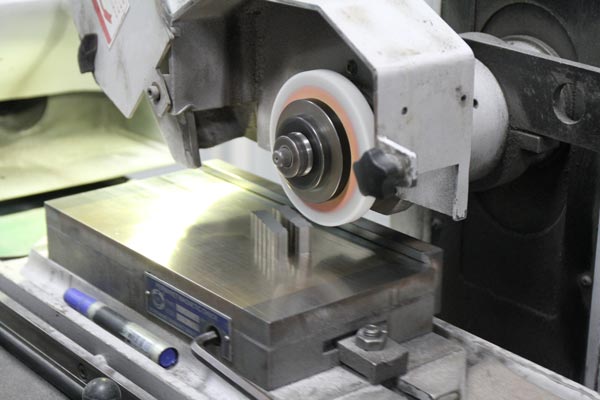
Die surface treatment is a key link in preventing adhesion. By adopting precision processing methods such as polishing and grinding, the surface roughness of the die can be significantly reduced to achieve a mirror-like smoothness. A smooth die surface can reduce the contact area with the material and the possibility of the material embedding into the die surface, thus effectively reducing friction and adhesion. At the same time, regularly conduct comprehensive maintenance and upkeep on the die, promptly clean impurities and dirt on the die surface, check for defects such as scratches and cracks on the die surface, and carry out repairs and restorations to ensure that the die is always in good working condition and extend its service life.
(II) Precisely Select Appropriate Lubricants
According to the specific processed materials and process requirements, precisely selecting appropriate lubricants is an important guarantee for preventing adhesion. The lubricant should have good lubrication performance and be able to quickly form a stable and uniform lubricating film between the die and the material to effectively reduce friction; at the same time, it should have excellent high-temperature resistance and be able to maintain lubrication performance in high-temperature processing environments to prevent the lubricating film from breaking and causing adhesion. In addition, the lubricant should also have good chemical stability and corrosion resistance and should not have adverse effects on the die and the material. During use, establish a sound lubricant management system, regularly check the quantity and quality of the lubricant, and promptly replenish and replace it to ensure that it is always in an effective state.
(III) Scientifically and Reasonably Select Processed Materials
When selecting processed materials, the physical and chemical properties of the materials, especially their adhesiveness, should be fully considered. For materials with high adhesiveness, some special treatment measures can be taken to reduce their adhesiveness to the die surface. For example, adding an appropriate amount of anti-adhesion agent to the material can form an isolation film on the material surface and reduce direct contact between the material and the die; or using coating technology to coat a layer of coating with low surface energy, such as polytetrafluoroethylene coating, on the material surface to reduce the adhesiveness of the material. In addition, according to the requirements of the processing technology, materials that match the die material can be selected to reduce adhesion problems caused by material mismatch.
(IV) Finely Adjust Cutting Parameters
According to the specific processing requirements and material properties, finely adjusting cutting parameters such as cutting speed, feed rate, and cutting depth is an important means of preventing adhesion. On the premise of ensuring processing quality and efficiency, avoid using excessively high cutting speed and feed rate as much as possible to reduce friction and heat generation between the die and the material. At the same time, according to the hardness and toughness of the material, reasonably select the cutting depth to avoid excessive cutting force borne by the die. During the processing, closely monitor the temperature and pressure changes on the processing site, install temperature sensors and pressure sensors and other monitoring equipment to obtain processing parameter information in real time, and adjust the cutting parameters in a timely manner according to the monitoring results to ensure the stability and reliability of the processing process.
(V) Actively Adopt Advanced Processing Technologies
With the continuous progress of science and technology, more and more advanced processing technologies have been applied in the field of die manufacturing, providing new solutions for preventing the adhesion phenomenon. For example, coating technology can form a layer of coating with excellent properties on the die surface, such as cemented carbide coating and ceramic coating. These coatings have characteristics such as high hardness, high wear resistance, low friction coefficient, and good anti-adhesion performance, which can significantly improve the service life and anti-adhesion ability of the die. In addition, the manufacturing technology of superhard materials is also gradually maturing. Using superhard materials such as cubic boron nitride (CBN) and polycrystalline diamond (PCD) to manufacture dies can effectively improve the hardness and wear resistance of the die and reduce the occurrence of the adhesion phenomenon. Enterprises should actively pay attention to industry technology development trends, timely introduce and apply these advanced processing technologies, and improve their own production technology levels.
III. Strengthen the Operation Specification and Training System
In addition to the above technical measures, standardized operation procedures and professional operator training are also indispensable important links for preventing the adhesion phenomenon. Enterprises should formulate a set of detailed and complete operation procedures to clarify the specific requirements and operation steps for the use, maintenance, and upkeep of the die, including die installation, debugging, operation specifications during processing, and cleaning and upkeep after processing. At the same time, regularly organize professional training and education for operators. Through theoretical explanations, practical operation demonstrations, case analysis, and other methods, let operators deeply understand the hazards, causes, and prevention measures of the adhesion phenomenon, master the correct die operation and maintenance methods, improve the skill level and sense of responsibility of operators, and ensure that they can operate strictly in accordance with the operation procedures and promptly detect and deal with problems that occur during die use.
IV. Summary and Future Prospects
Preventing the adhesion phenomenon of tungsten carbide dies is a systematic and complex task that requires enterprises to conduct comprehensive consideration and coordinated promotion from multiple aspects such as die surface treatment, lubricant selection, material selection, cutting parameter adjustment, processing technology application, and operation specification and training. By implementing the above series of comprehensive and systematic prevention measures, enterprises can effectively reduce the occurrence probability of the adhesion phenomenon, improve the service life and product quality of the die, reduce production costs, and enhance their market competitiveness.
Looking ahead, with the continuous innovation of science and technology and the rapid development of industry, there will be more technological breakthroughs and innovation opportunities in the field of die manufacturing. We believe that more advanced technologies and methods will be applied to prevent the adhesion phenomenon, such as intelligent monitoring technology and nanomaterial technology. Intelligent monitoring technology can monitor various parameters during die processing in real time, such as temperature, pressure, and friction force, and provide early warning of adhesion risks through data analysis, enabling operators to adjust processing parameters in a timely manner; nanomaterial technology can develop die materials and lubricants with more excellent properties to further improve the anti-adhesion ability of the die. Enterprises should closely monitor industry trends and technological development trends, actively invest in research and development resources, and timely introduce and apply these new technologies to continuously improve their technological levels and innovation capabilities and stand out in fierce market competition.
Related Posts
- How to Accurately Determine Whether a Tungsten Carbide Die Needs Replacement?
- In – depth Analysis of the Impact of Polishing Treatment on the Performance of Tungsten Carbide Dies
- Selection Basis of Tungsten Carbide Die Core Materials
- How to Ensure High – Precision Processing of Tungsten Carbide Dies?

 English
  Deutsch
  Français
  日本語
日本語  한국어
한국어  Español
  Português
  Italiano
  Nederlands
  Русский
  Bahasa Indonesia
  العربية