

How to Accurately Determine Whether a Tungsten Carbide Die Needs Replacement?
In the field of industrial production, tungsten carbide dies are indispensable key tools in numerous manufacturing processes due to their excellent high hardness, high wear resistance, and high thermal stability, […]
In the field of industrial production, tungsten carbide dies are indispensable key tools in numerous manufacturing processes due to their excellent high hardness, high wear resistance, and high thermal stability, and are widely applied in various precision manufacturing scenarios. However, with the extension of service time and the increase in usage frequency, dies inevitably experience wear and aging. This not only directly reduces production efficiency but also has a negative impact on product quality. Therefore, timely and accurate determination and replacement of aging dies are of crucial importance for ensuring production stability and product excellence. This article will delve into the key points for determining whether a tungsten carbide die needs replacement and provide a series of practical suggestions for extending the die’s service life.
I. Precise Visual Inspection of Die Wear
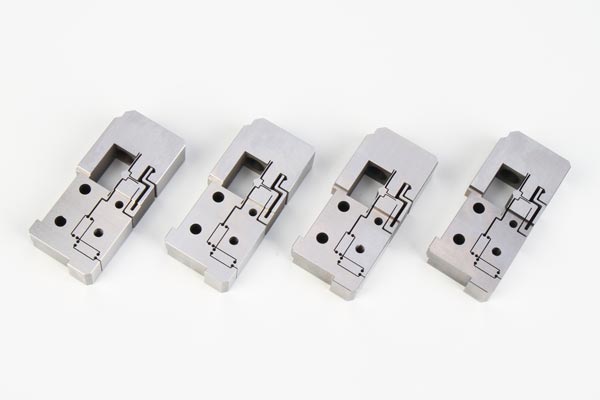
Visual inspection is one of the most intuitive and effective methods for determining whether a die needs replacement. During the use of the die, its surface will gradually show various signs of wear and fatigue. Especially at the edges of the die, if there is blunting or irregular deformation, this is a clear indication of die wear. In addition, when fatigue damage phenomena such as cracks or spalling appear on the die surface, it indicates that the die is approaching the end of its service life, and continued use may lead to more serious quality issues or even production accidents.
Our factory business: carbide parts, mold parts, medical injection molds, precision injection molds, teflon PFA injection molding, PFA tube fittings. email: [email protected],whatsapp:+8613302615729.
In addition to direct visual observation, using professional measuring tools to precisely measure the key dimensions of the die is also an important means of assessing die wear. If the dimensional accuracy of the die cannot meet production requirements, for example, excessive punching clearance leads to excessive burrs on the product, or the die cavity dimensions exceed the tolerance range, these are clear signals for die replacement. Continuing to use such a die will not only affect product quality but may also cause damage to production equipment.
II. Scientific Consideration of Die Usage Count
The usage count of the die is an important reference for determining whether it needs replacement. Different types of dies have different design lives due to differences in their design structures, material selections, and manufacturing processes. Generally speaking, high-quality dies can have a design life of hundreds of thousands of times or even more. Therefore, it is crucial to establish a sound die usage count recording system. By accurately recording the usage count of the die, when the die approaches or reaches its design life, its performance and condition can be closely monitored, and preparations for replacement can be made in advance to avoid production disruptions caused by sudden die failures.
At the same time, the operating environment of the die also has a significant impact on its service life. Dies working in high-temperature, high-pressure, or corrosive environments will suffer more severe damage to their internal molecular structures and material properties, resulting in a substantial reduction in service life. Therefore, for dies working in harsh environments, more frequent inspection and replacement plans need to be formulated to ensure that the dies are always in good working condition.
III. Keen Insight into Die Performance Degradation
The degradation of die performance is a key indicator for determining whether it needs replacement. When die wear leads to a significant decline in product quality, such as inaccurate product dimensions or increased surface roughness, it indicates that the die can no longer meet production requirements, and replacement should be considered. In addition, if the die frequently experiences failures during the production process, such as sticking or breaking, this not only affects production efficiency but may also pose a threat to the personal safety of operators. This is also a manifestation of severe die performance degradation, and the die must be replaced in a timely manner.
It is worth noting that die performance degradation is not always caused solely by problems with the die itself. Improper usage methods or inadequate maintenance can also lead to die performance degradation. For example, overloading the die will accelerate its wear and aging; and the lack of regular cleaning and lubrication will increase the friction and resistance during die operation, thereby reducing its service life. Therefore, when using the die, it is essential to strictly follow the operating procedures, avoid overloading and improper operations, and strengthen die maintenance.
IV. Fine Management of Die Maintenance
Although the core theme of this article is to determine whether a die needs replacement, good maintenance is equally crucial for extending the die’s service life, improving production efficiency, and ensuring product quality. For tungsten carbide dies, regular cleaning and lubrication are essential maintenance measures.
Regular cleaning of the die can effectively remove dirt, residues, and oxide layers on the die surface, preventing these impurities from causing further damage to the die. During the cleaning process, appropriate cleaning agents and tools should be used to avoid scratching or corroding the die surface. Lubrication, on the other hand, can reduce friction and wear during die operation, reduce energy consumption, and extend the die’s service life. Selecting the appropriate lubricant and following the prescribed lubrication cycle and method can ensure that the die is always in good lubrication condition.
In addition, regular inspection of the die’s fasteners is also an important part of maintenance. During die operation, vibrations and impacts may cause fasteners such as bolts and nuts to loosen or be damaged. If there are problems with the fasteners, it will affect the stability and safety of the die and may even lead to die damage. Therefore, the fasteners of the die, such as bolts and nuts, should be regularly inspected, and any loose fasteners should be promptly tightened to ensure the normal operation of the die.
V. Summary and Professional Suggestions
Determining whether a tungsten carbide die needs replacement is a comprehensive decision-making process that requires consideration of multiple factors. Through precise visual inspection, scientific usage count statistics, keen performance assessment, and detailed maintenance inspection, we can more accurately determine the die’s condition and make reasonable decisions.
In actual operation, it is recommended to formulate detailed die usage and maintenance record forms to comprehensively record information such as die usage count, maintenance status, and performance changes. Through these records, the usage and performance change trends of the die can be tracked in a timely manner, providing strong data support for die replacement decisions. At the same time, regular training and education for operators are also very important. Through training, operators can understand the correct usage methods and maintenance knowledge of the die, improve their operating skills and maintenance awareness, and ensure that the die is used correctly and maintained in a timely manner.
Finally, it is necessary to emphasize the principle that prevention is better than cure. By formulating reasonable usage and maintenance strategies and preventing die problems in advance, the service life of the die can be effectively extended, production costs can be reduced, and production efficiency can be improved. Therefore, in actual production, we should attach great importance to the preventive maintenance of dies, establish a sound die management system, ensure that dies are always in good working condition, and provide strong guarantees for the production and development of enterprises.
Related Posts
- How to Accurately Determine Whether a Tungsten Carbide Die Needs Replacement?
- In – depth Analysis of the Impact of Polishing Treatment on the Performance of Tungsten Carbide Dies
- Selection Basis of Tungsten Carbide Die Core Materials
- How to Ensure High – Precision Processing of Tungsten Carbide Dies?



 English
  Deutsch
  Français
  日本語
日本語  한국어
한국어  Español
  Português
  Italiano
  Nederlands
  Русский
  Bahasa Indonesia
  العربية