

How to Comprehensively Evaluate the Quality of Tungsten Carbide Dies from Different Manufacturers
In a multitude of crucial industries such as aerospace, automotive manufacturing, and precision machinery, tungsten carbide dies serve as indispensable production tools. Their quality directly determines the precision, performance, and […]
In a multitude of crucial industries such as aerospace, automotive manufacturing, and precision machinery, tungsten carbide dies serve as indispensable production tools. Their quality directly determines the precision, performance, and production efficiency of the products. However, the current market is flooded with a large number of tungsten carbide die manufacturers, and the product quality varies greatly. How to accurately evaluate the quality of tungsten carbide dies from different manufacturers has become a pressing issue for enterprises when making procurement decisions. This article will conduct an in-depth analysis from multiple dimensions, providing enterprises with a comprehensive and practical evaluation method to assist them in making wise procurement choices.
I. Raw Materials: In-depth Exploration of the Foundation of Quality
(A) Material Source: Tracing Back to Quality Assurance
The raw materials of high-quality tungsten carbide dies must have a reliable origin. Typically, high-grade tungsten carbide materials come from well-known steel enterprises. These enterprises, relying on advanced production processes and strict quality control, ensure that the raw materials have stable chemical compositions and excellent physical properties. When evaluating the quality of tungsten carbide dies, enterprises should gain an in-depth understanding of the manufacturers’ raw material procurement channels and give priority to those manufacturers that have established long-term and stable cooperative relationships with well-known raw material suppliers, laying a solid foundation for die quality from the source.
Our factory business: carbide parts, mold parts, medical injection molds, precision injection molds, teflon PFA injection molding, PFA tube fittings. email: [email protected],whatsapp:+8613302615729.
(B) Material Performance: Precise Consideration of Multiple Indicators
Material performance is one of the core elements for measuring the quality of tungsten carbide dies, covering multiple key indicators such as hardness, toughness, wear resistance, and thermal fatigue resistance. High-hardness tungsten carbide materials can ensure that the dies remain wear-resistant during long-term use, always maintaining precise dimensions and shapes. Good toughness enables the dies to withstand external impacts without breaking easily, extending their service life. Excellent wear resistance reduces the friction loss between the dies and the processed materials, lowering maintenance costs. And outstanding thermal fatigue resistance is crucial for tungsten carbide dies because during the manufacturing process, they frequently have to withstand high temperatures and rapid temperature changes. Materials with poor thermal fatigue resistance are prone to deformation or cracking, seriously affecting die quality and production efficiency. Therefore, when evaluating, enterprises should request manufacturers to provide detailed material performance test reports to ensure that the material performance of the selected dies meets production requirements.
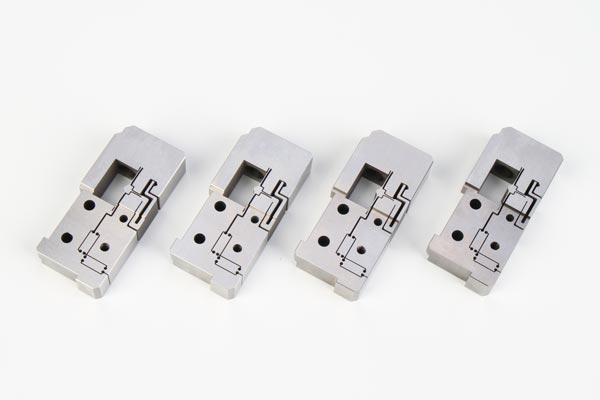
II. Production Process: The Key Link in Quality Shaping
(A) Equipment Level: Advanced Equipment Forging Excellent Quality
The level of production process largely depends on the advancement of production equipment. Advanced production equipment is like a highly skilled craftsman, which can significantly improve the machining accuracy and surface quality of the dies, effectively reducing errors and defects. For example, high-precision CNC machining equipment can achieve micron-level machining of dies, ensuring extremely high dimensional and shape accuracy. Advanced grinding and polishing equipment can endow the dies with a mirror-like surface, enhancing the appearance quality of the products. When evaluating the quality of tungsten carbide dies, enterprises should conduct on-site inspections of the manufacturers’ production workshops to understand their equipment configurations and give priority to those manufacturers with advanced and highly automated equipment to ensure the stability and reliability of the die production process.
(B) Process Flow: Scientific Planning Ensuring Stable Production
A reasonable process flow is the key to ensuring a stable and reliable manufacturing process for tungsten carbide dies. A scientific and comprehensive process flow should cover multiple links such as raw material processing, heat treatment, machining, and grinding and polishing, and each link must strictly follow corresponding process specifications and operation procedures. In the raw material processing link, each batch of raw materials needs to undergo strict inspection and pre-treatment to ensure that their quality meets the requirements. In the heat treatment link, by precisely controlling parameters such as heating temperature, holding time, and cooling rate, the organizational structure and properties of the materials are improved. In the machining link, advanced machining equipment and process methods are used to machine the dies to the designed dimensions. In the grinding and polishing link, the surface quality of the dies is further improved to meet the usage requirements. When evaluating, enterprises should gain a detailed understanding of the manufacturers’ process flows and check whether they have complete process documents and operation specifications to ensure the controllability and stability of the die manufacturing process.
(C) Quality Control: A Strict System Ensuring Consistent Quality
Quality control is an important line of defense for ensuring the quality of tungsten carbide dies. High-quality manufacturers usually establish a complete quality control system to conduct strict inspection and testing of raw materials, semi-finished products, and finished products throughout the entire process. In the raw material inspection link, chemical composition analysis and physical property testing are carried out on each batch of raw materials to ensure that the raw material quality meets the standard requirements. In the semi-finished product inspection link, the machining accuracy and surface quality of the dies are monitored in real-time to promptly detect and correct problems arising during the production process. In the finished product inspection link, professional testing equipment and testing methods are used to conduct a comprehensive inspection of the dimensional accuracy, surface quality, wear resistance, and thermal fatigue resistance of the dies to ensure that every set of dies leaving the factory meets the quality standards. When evaluating, enterprises should understand the manufacturers’ quality control systems, check whether their testing methods are scientific and reasonable, whether the testing standards are strict and standardized, and whether the testing frequency is appropriate to ensure the stability and reliability of die quality.
III. Die Performance: Core Considerations for Practical Applications
(A) Dimensional Accuracy: A Rigid Indicator for Precision Manufacturing
The dimensional accuracy of dies is one of the important indicators for evaluating their quality and is directly related to whether the manufactured products meet the design requirements. High-quality tungsten carbide dies should have high-precision dimensions and shapes, with dimensional deviations controlled within a very small range. When evaluating, enterprises should use professional measuring tools such as coordinate measuring machines and calipers to accurately measure the key dimensions of the dies and carefully compare them with the design drawings to ensure that the dimensional accuracy of the dies meets production requirements. At the same time, the shape accuracy of the dies should also be tested to ensure that the shapes of cavities, cores, and other parts of the dies are consistent with the design requirements, avoiding defects in products caused by shape deviations.
(B) Surface Quality: A Dual Reflection of Appearance and Performance
Surface quality is not only an important manifestation of the appearance of tungsten carbide dies but also has a significant impact on their usage performance. High-quality tungsten carbide dies should have a smooth, flat, and defect-free surface, with a surface roughness reaching a high standard. A smooth surface can reduce the friction resistance between the dies and the processed materials, reduce energy consumption, and improve production efficiency. At the same time, it can also reduce surface flaws on products and enhance their appearance quality. When evaluating, enterprises should carefully observe the surface quality of the dies, check for the presence of scratches, cracks, pores, and other defects, and use professional surface roughness measuring instruments to test the surface roughness of the dies to ensure that their surface quality meets the requirements.
(C) Wear Resistance and Service Life: Cost Considerations for Long-term Use
Wear resistance and service life are important economic indicators for evaluating the quality of tungsten carbide dies, directly related to the production costs and production efficiency of enterprises. High-quality tungsten carbide dies should have a long service life and good wear resistance, maintaining stable performance during long-term use, reducing the frequency of die replacement, and lowering production costs. When evaluating, enterprises can learn about the product usage cases and customer feedback of manufacturers to understand the wear resistance and service life performance of the dies in actual production. At the same time, they can also request manufacturers to provide relevant wear resistance test reports and service life prediction data to scientifically evaluate the wear resistance and service life of the dies.
IV. Service and Support: A Solid Guarantee for Long-term Cooperation
(A) Technical Support: Professional Services Ensuring Worry-free Production
In addition to product quality itself, the technical support capability of manufacturers is also an important indicator for evaluating their comprehensive strength. High-quality manufacturers usually have a professional technical support team that can provide enterprises with a full range of technical support services, including product consultation, solution design, installation and commissioning, and operation training. During the product consultation stage, the technical support team can recommend suitable tungsten carbide die products for enterprises based on their production needs and product characteristics. During the solution design stage, they can design scientific and reasonable die usage solutions for enterprises to improve production efficiency and product quality. During the installation and commissioning stage, they can ensure that the dies are correctly installed and commissioned to achieve the best usage status. During the operation training stage, they can provide professional operation training for enterprise employees to enable them to master the usage methods and maintenance skills of the dies proficiently. When evaluating, enterprises should understand the professional level, service response speed, and service content of the manufacturers’ technical support teams to ensure that they can receive timely and effective technical support during the use process.
(B) After-sales Service: Considerate Support Relieving Worries
After-sales service is an important aspect for evaluating the comprehensive strength of manufacturers and is directly related to the experience and interests of enterprises during the use of dies. High-quality manufacturers usually provide a complete after-sales service system, including product maintenance, upkeep, and return and exchange services. In terms of product maintenance, manufacturers should be able to respond promptly to the maintenance needs of enterprises and dispatch professional maintenance personnel to the site for maintenance to ensure that the dies resume normal use as soon as possible. In terms of product upkeep, manufacturers should be able to provide regular upkeep services for enterprises to extend the service life of the dies. In terms of return and exchange services, manufacturers should formulate reasonable return and exchange policies and be able to handle relevant procedures promptly for die returns and exchanges caused by quality problems to reduce the losses of enterprises. When evaluating, enterprises should understand the manufacturers’ after-sales service policies, the coverage range of their after-sales service networks, and their after-sales service satisfaction to ensure that they can receive timely and effective after-sales service support during the use process.
Evaluating the quality of tungsten carbide dies from different manufacturers is a systematic and complex task that requires enterprises to conduct a careful and in-depth consideration from multiple aspects, such as raw materials, production process, die performance, and service and support. Only by comprehensively considering the above factors can enterprises accurately evaluate the quality of tungsten carbide dies from different manufacturers, select the high-quality dies that best meet their production needs, and provide strong guarantees for their production and development.



 English
  Deutsch
  Français
  日本語
日本語  한국어
한국어  Español
  Português
  Italiano
  Nederlands
  Русский
  Bahasa Indonesia
  العربية