
In – depth Analysis of the Impact of Polishing Treatment on the Performance of Tungsten Carbide Dies
In the diverse landscape of industrial manufacturing, tungsten carbide dies stand out due to their remarkable high hardness, high strength, and excellent wear resistance, playing a pivotal role in a […]
In the diverse landscape of industrial manufacturing, tungsten carbide dies stand out due to their remarkable high hardness, high strength, and excellent wear resistance, playing a pivotal role in a wide range of industrial manufacturing scenarios. However, the performance of a die is not solely determined by its material properties; its surface quality also holds significant sway. Polishing treatment, as a core means of enhancing the surface quality of dies, has an undeniable and far – reaching impact on the performance of tungsten carbide dies. This article will conduct a comprehensive and in – depth exploration of the specific effects of polishing treatment on the performance of tungsten carbide dies.
Polishing Treatment: Concept and Core Value
Polishing treatment is a process that utilizes mechanical, chemical, or electrochemical methods to achieve a smooth and glossy surface on the die. It is not merely an upgrade of the die’s appearance quality but also plays a crucial role in improving the die’s service performance and extending its service life. For tungsten carbide dies, the significance of polishing treatment is particularly profound. During the machining process, surface defects such as burrs and scratches are inevitable on the die surface. These defects not only affect the aesthetic appeal of the die but also lead to stress concentration issues, reducing the die’s wear resistance and corrosion resistance. Polishing treatment can effectively eliminate these surface defects, laying a solid foundation for enhancing the die’s performance.
Our factory business: carbide parts, mold parts, medical injection molds, precision injection molds, teflon PFA injection molding, PFA tube fittings. email: [email protected],whatsapp:+8613302615729.
Multi – dimensional Impacts of Polishing Treatment on the Performance of Tungsten Carbide Dies
Surface Finish: Dual Improvement in Quality and Efficiency
Polishing treatment can significantly enhance the surface finish of tungsten carbide dies, achieving a near – mirror effect. A high – finish surface offers several advantages. On one hand, it can effectively reduce the friction and resistance between the material and the die during the molding process, thereby improving the product’s molding quality and accelerating the production pace, enhancing production efficiency. On the other hand, a glossy surface can reduce the adhesion between the die and the material, making the demolding process smoother and reducing product defects caused by difficult demolding.
Wear Resistance: Prolonging Service Life and Reducing Production Costs
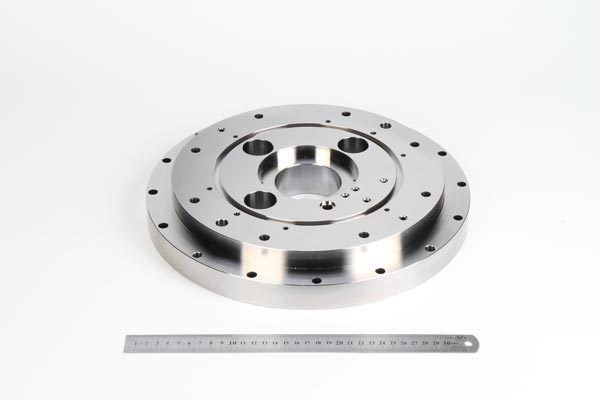
After polishing treatment, the surface roughness of tungsten carbide dies is greatly reduced, and the friction coefficient also decreases, which directly reduces the wear degree of the die during use. In addition, polishing treatment can promote the formation of a dense oxide film on the die surface, further enhancing its wear resistance. The improvement in wear resistance means that the die can withstand longer – term use and more complex working environments, effectively extending the die’s service life and reducing the enterprise’s production costs.
Corrosion Resistance: Resisting Harsh Environments and Ensuring Stable Operation
Polishing treatment can not only remove impurities and oxide layers on the die surface but also make the die surface more uniform and dense. This unique surface structure can effectively resist the erosion of corrosive media and improve the die’s corrosion resistance. For dies used in humid or corrosive environments, after polishing treatment, their service life will be significantly extended, ensuring the stability and continuity of production.
Demolding Performance: Optimizing the Production Process and Enhancing Product Quality
The demolding performance of tungsten carbide dies is directly related to the product’s quality and production efficiency. Polishing treatment can significantly reduce the surface roughness of the die, decreasing the adhesion force between the material and the die, and making the demolding process easier and faster. This not only improves production efficiency and shortens the production cycle but also reduces the defect rate of products caused by difficult demolding, enhancing the overall quality of the products.
Precision and Stability: Ensuring Product Consistency and Boosting Market Competitiveness
Polishing treatment can remove tiny protrusions and uneven parts on the die surface, making the die’s shape more precise and its dimensions more stable. At the same time, a smooth surface can reduce the heat and stress concentration generated by friction during use, improving the die’s stability. These advantages help improve the dimensional accuracy and consistency of products, meeting the market’s demand for high – quality products and enhancing the enterprise’s market competitiveness.
Precise Control of Polishing Treatment: Methods and Techniques
Polishing treatment of tungsten carbide dies usually adopts methods such as mechanical polishing, chemical polishing, or electrochemical polishing. When selecting a polishing method, it is necessary to comprehensively consider factors such as the specific material, shape, and application of the die to ensure the selection of the most suitable polishing process. Meanwhile, during the polishing process, strict control of parameters such as the type, concentration, and temperature of the polishing agent is required, as minor changes in these parameters can have a significant impact on the polishing effect. In addition, regular inspection and maintenance of polishing equipment are also key to ensuring polishing quality. Only by maintaining the equipment in good operating condition can stable and high – quality polishing effects be obtained.
Case Analysis and Practical Experience: Demonstrating the Excellent Effects of Polishing Treatment
Through case analysis in actual production, we can more intuitively feel the positive impact of polishing treatment on the performance of tungsten carbide dies. Take a certain injection – molding enterprise as an example. By conducting fine polishing treatment on tungsten carbide dies, the product’s molding quality was significantly improved, and production efficiency was greatly enhanced. At the same time, the wear resistance and corrosion resistance of the dies were also significantly enhanced, reducing production costs and maintenance frequency. These practical experiences fully prove the important role of polishing treatment in improving the performance of tungsten carbide dies and provide valuable references for other enterprises.
Conclusion and Outlook: Exploring and Moving Forward to Create a New Future for Industrial Manufacturing
In conclusion, polishing treatment has a comprehensive and in – depth impact on the performance of tungsten carbide dies. Through improvements in enhancing surface finish, increasing wear resistance, improving corrosion resistance, optimizing demolding performance, and improving precision and stability, polishing treatment provides a solid guarantee for the efficient and stable use of tungsten carbide dies. With the continuous progress of science and technology and the sustained development of industrial manufacturing, in the future, we will continue to explore more advanced polishing technologies and methods to further improve the performance and service life of tungsten carbide dies. At the same time, strengthening quality control and technological innovation in the polishing treatment process is also an important direction for the development of the industry. By continuously optimizing the polishing process and improving the polishing quality, we will bring more efficient and stable production solutions to the field of industrial manufacturing and drive industrial manufacturing to new heights.


 English
  Deutsch
  Français
  日本語
日本語  한국어
한국어  Español
  Português
  Italiano
  Nederlands
  Русский
  Bahasa Indonesia
  العربية