

Precautions in the Design of Tungsten Carbide Die Frames
In the realm of industrial production, tungsten carbide dies play a pivotal role as indispensable tools for shaping numerous products. The frame of a tungsten carbide die, akin to the […]
In the realm of industrial production, tungsten carbide dies play a pivotal role as indispensable tools for shaping numerous products. The frame of a tungsten carbide die, akin to the skeleton of a building, directly determines the die’s service life, machining accuracy, and production efficiency. Therefore, when designing tungsten carbide die frames, it is imperative to comprehensively consider multiple key aspects to ensure the die’s superior performance and reliable stability.
I. Material Selection and Heat Treatment: Laying the Foundation for Performance
Tungsten carbide is a popular choice for die materials due to its remarkable advantages, including high hardness, high strength, and excellent wear resistance. However, it also has a significant drawback – relatively high brittleness, which makes it prone to cracking during use. This requires designers to act as astute “material selectors.” They must carefully choose the appropriate tungsten carbide grade and quality based on the die’s specific operating environment and requirements. For instance, for dies subject to high impact forces, a tungsten carbide material with relatively better toughness should be selected.
Our factory business: carbide parts, mold parts, medical injection molds, precision injection molds, teflon PFA injection molding, PFA tube fittings. email: [email protected],whatsapp:+8613302615729.
Meanwhile, reasonable heat treatment processes serve as the “magic key” to enhancing die performance. Through heat treatment methods such as quenching and tempering, designers can transform the material’s microstructure, similar to how a skilled “microstructure adjuster” optimizes its mechanical properties. Quenching endows the material with high hardness and wear resistance, while tempering eliminates quenching stresses, reducing the risk of deformation and cracking during use and enabling the die to maintain stability in complex working conditions.
II. Structural Design: Building a Sturdy Framework
Overall Structural Stability: Constructing a Solid Fortress
The overall structure of a die frame is like the framework of a building and must be designed reasonably and stably. It should be able to withstand various forces and thermal deformations during the working process, just as a stalwart guardian protects against external influences. For large-scale dies, due to their large size and heavy weight, more robust support structures are required, such as increasing the number of support columns or using high-strength support materials. This ensures that the die will not deform or be damaged during long-term use, providing a solid foundation for stable product production.
Guiding and Positioning: Ensuring Precision
An accurate guiding and positioning system is the “core code” for ensuring die accuracy. During the design process, designers should act as meticulous “layout planners” and fully consider the arrangement and precision requirements of guiding elements such as guide posts and guide sleeves. The clearance between the guide post and guide sleeve should be appropriate. Excessive clearance can cause the die to shake during mold closing and opening, affecting accuracy, while insufficient clearance increases friction and shortens the die’s service life. Accurate guiding and positioning ensure that the die can align precisely during each mold closing and opening, laying the foundation for producing high-quality products.
Cooling and Heating Systems: Controlling the Temperature Lifeline
For dies that require temperature control, designing effective cooling or heating systems is of utmost importance. Reasonable arrangements of cooling channels or heating elements are like those of a clever “temperature regulator,” enabling the die to maintain a stable temperature during the working process. For example, in injection molds, the layout of cooling channels should be optimized according to the product’s shape and size to ensure that cooling water can evenly flow through all parts of the die, quickly removing heat, shortening the molding cycle, and improving production efficiency. Moreover, a stable temperature reduces product deformation and internal stress, enhancing product quality.
Design of Wear Parts: Reducing Maintenance Costs
Wear parts in dies, such as ejector pins and inserts, are like consumables in machinery and require frequent replacement and maintenance. Therefore, during the design phase, they should be designed in a form that facilitates replacement and maintenance, similar to creating a “convenient replacement passage” for them. For example, using standardized ejector pins and inserts makes it easier to find suitable replacement parts, and designing reasonable disassembly structures reduces replacement time, lowers maintenance costs, and improves production efficiency.
III. Precision and Tolerance Control: Pursuing Ultimate Precision
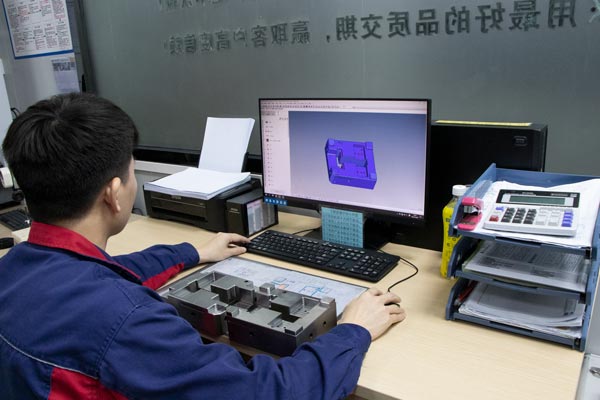
Die precision is the “lifeline” of product quality and directly affects the product’s dimensional accuracy, surface quality, and production efficiency. During the design process, designers should act as meticulous “precision controllers” and strictly control the dimensional and geometric tolerances of each component. For critical parts such as cavities and cores, fine polishing and treatment are also required to reduce friction and wear and extend the die’s service life. For instance, by using advanced machining equipment and processes, the dimensional accuracy of cavities and cores can be ensured to reach the micrometer level, providing a guarantee for producing high-precision products.
IV. Safety Performance Considerations: Guarding the Life Line
Safety is always the top priority in industrial production, and the same applies to die design. Designers should act as considerate “safety guardians” and fully consider the safety of operators. They should avoid designing sharp edges or protruding parts to reduce the risk of accidental injuries. At the same time, corresponding safety protection measures and emergency response plans should be designed for potential failures or abnormal situations. For example, installing safety protection devices on the die, such as guardrails and safety doors, prevents operators from being injured during die operation. Formulating emergency response plans enables quick actions to be taken when die failures occur to avoid accident escalation.
V. Repairability and Maintainability: Extending Service Life
Dies are inevitably subject to wear or failures during use, so their repairability and maintainability should be fully considered during the design phase. A reasonable structural design is like creating a “repair-friendly constitution” for the die, making it easier to disassemble and repair when failures occur, thereby reducing downtime and maintenance costs. For example, adopting a modular design divides the die into multiple independent modules. When a specific module fails, only that module needs to be replaced, eliminating the need for extensive repairs on the entire die.
VI. Cost Control and Environmental Requirements: Achieving Sustainable Development
Cost Control: Pursuing Optimal Cost-Effectiveness
While meeting performance requirements, efforts should be made to reduce the manufacturing cost of the die. Designers should act as astute “cost stewards” and achieve cost reduction through measures such as optimizing the design scheme, selecting appropriate materials, and adopting suitable machining processes. For example, using value engineering analysis methods to conduct functional analysis and cost evaluation of each component of the die can help eliminate unnecessary functions and costs, improving the die’s cost-effectiveness.
Environmental Requirements: Practicing Green Concepts
With the increasing awareness of environmental protection, die design should also take environmental requirements into account. Designers should act as environmental ambassadors, selecting environmentally friendly materials, reducing waste generation, and improving energy efficiency. For example, using recyclable materials to manufacture dies reduces environmental pollution, and optimizing the die’s cooling system reduces energy consumption, achieving green manufacturing.
VII. Summary and Outlook: Embracing an Innovative Future
The design of tungsten carbide die frames is a complex and meticulous process that requires a comprehensive consideration of multiple aspects, including materials, structure, precision, safety, repairability, cost, and environmental protection. Only by considering these factors comprehensively and meticulously can high-performance and reliable dies be designed to provide strong support for industrial production development.
With the continuous progress of science and technology and the development of industrial production, higher requirements are placed on the performance and stability of dies. In the future, we can expect to further improve the design level and manufacturing quality of tungsten carbide dies by introducing new design concepts and technological means, such as digital design and intelligent manufacturing. For example, using digital design software for virtual design and simulation analysis of dies can help identify and optimize design problems in advance, reducing the number of mold trials and improving design efficiency. Adopting intelligent manufacturing technologies can achieve automated production and intelligent management of dies, enhancing production efficiency and product quality.
Meanwhile, with the promotion of intelligent and green manufacturing concepts, die design also needs to keep pace with the times and incorporate more intelligent and environmental elements. For example, by introducing sensors and control systems, real-time monitoring and adjustment of die status can be achieved, enabling timely detection of potential die failures and early warning. Using new environmentally friendly materials and energy-saving technologies can reduce environmental pollution and energy consumption during die manufacturing and use, promoting the sustainable development of the tungsten carbide die industry.
In addition, for die designers, continuous learning and mastery of new technologies and materials are of utmost importance. With the rapid development of science and technology, new materials and advanced machining technologies are constantly emerging, providing more possibilities and choices for die design. Designers should maintain keen market insight and innovative awareness and continuously apply new technologies and materials to actual designs to enhance the die’s performance and competitiveness and stand out in the fierce market competition.
In conclusion, the design of tungsten carbide die frames is a highly comprehensive and technically demanding field. In future development, we should uphold the concepts of innovation, intelligence, and environmental protection, continuously explore and practice, and contribute our own efforts to promoting the progress and development of the die industry.


 English
  Deutsch
  Français
  日本語
日本語  한국어
한국어  Español
  Português
  Italiano
  Nederlands
  Русский
  Bahasa Indonesia
  العربية