

The Impact of the Precision of Tungsten Carbide Die on Machining Quality
In the modern mechanical machining industry, the precision of dies is closely related to the quality and efficiency of machined parts. Tungsten carbide die plays a crucial role in various […]
In the modern mechanical machining industry, the precision of dies is closely related to the quality and efficiency of machined parts. Tungsten carbide die plays a crucial role in various machining processes due to its high strength, high wear resistance, and high corrosion resistance. This article will delve into the impact of the precision of tungsten carbide die on machining quality, aiming to provide theoretical support and practical guidance for improving the overall quality level of the machining industry.
The Importance of the Precision of Tungsten Carbide Die
The precision of tungsten carbide die refers to the degree of conformity between the die’s parameters such as dimensions, shapes, and positions and the design values. A high-precision die can ensure that the machined parts have accurate dimensions and standard shapes, thereby improving the interchangeability and service life of the products. Conversely, if the die precision is insufficient, it will lead to dimension deviations and shape distortions in the machined parts. In severe cases, it may even trigger product quality issues and cause economic losses to enterprises.
Our factory business: carbide parts, mold parts, medical injection molds, precision injection molds, teflon PFA injection molding, PFA tube fittings. email: [email protected],whatsapp:+8613302615729.
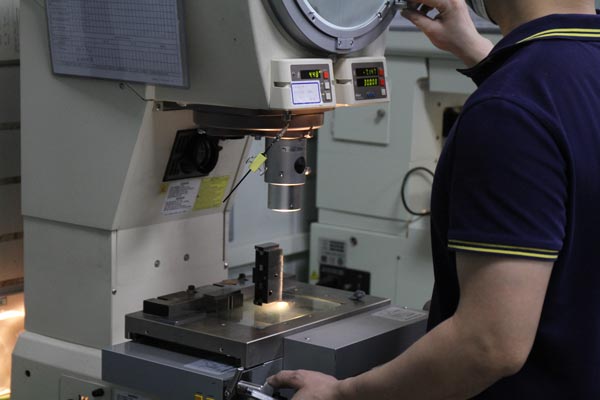
The Specific Impact of the Precision of Tungsten Carbide Die on Machining Quality
Impact on Dimension Precision
The dimension precision of tungsten carbide die directly affects the dimension precision of the machined parts. If the dimension precision of the die is low, the machined parts will have relatively large dimension deviations. These deviations will not only affect the assembly performance of the parts but may also lead to problems such as jamming and excessive wear during the use of the parts. For example, in precision mechanical assembly, parts with large dimension deviations may not be able to cooperate properly with other components, affecting the operation of the entire mechanical system.
Impact on Shape Precision
Shape precision refers to the degree of conformity between the actual shape of the die cavity or core and the designed shape. It directly affects the shape and contour precision of the machined parts. If the shape precision of the die is low, the shape of the machined parts will not meet the design requirements, which will affect the use performance and appearance quality of the parts. Taking automotive parts as an example, parts with insufficient shape precision may affect the sealing and aerodynamic performance of the vehicle.
Impact on Position Precision
Position precision refers to the relative positional relationship among the various parts of the die. It determines whether the relative positions of the various parts of the machined parts are accurate. If the position precision of the die is low, the machined parts may have positional deviations, causing the parts to be unable to work or assemble normally. In electronic equipment manufacturing, parts with positional deviations may affect circuit connections and signal transmission.
Factors Affecting the Precision of Tungsten Carbide Die
Material Quality
The material quality of tungsten carbide die has a vital impact on the die precision. High-quality materials can ensure that the die has higher hardness and wear resistance, thus maintaining precision stability for a longer time during the machining process. If the material quality is poor, the die is prone to wear and deformation, affecting its precision.
Machining Process
The rationality and advancement of the machining process are also important factors affecting the die precision. The use of advanced machining technologies such as numerical control machining and electrical discharge machining can significantly improve the machining precision and surface quality of the die. Backward machining processes may lead to large machining errors and difficulty in ensuring die precision.
Heat Treatment Process
The heat treatment process has a significant impact on the precision of tungsten carbide die. A reasonable heat treatment process can eliminate the residual stress inside the die and improve its dimensional stability and wear resistance. An unreasonable heat treatment process may cause the die to deform and reduce its precision.
Measures to Improve the Precision of Tungsten Carbide Die
Optimize Material Selection
Selecting high-quality and high-performance tungsten carbide materials is the foundation for improving die precision. High-quality materials can ensure that the die maintains high precision and stability during machining and use. Enterprises should cooperate with high-quality material suppliers and strictly control material quality.
Improve Machining Process
Adopt advanced numerical control machining technologies and electrical discharge machining technologies to improve the machining precision of the die. At the same time, arrange the machining procedures reasonably to reduce machining deformation and errors. For example, by optimizing cutting parameters, the influence of cutting force on the die can be reduced.
Optimize Heat Treatment Process
Through a reasonable heat treatment process, eliminate the residual stress inside the die and improve its dimensional stability and wear resistance. Pay attention to temperature control and cooling rate during the heat treatment process to avoid excessive deformation of the die. Multiple heat treatment tests can be carried out to determine the optimal process parameters.
Conclusion
The precision of tungsten carbide die has a significant impact on machining quality. By optimizing material selection, improving the machining process, and optimizing the heat treatment process, the precision of the die can be effectively improved, thereby enhancing the quality and efficiency of machined parts. With the continuous progress of science and technology and the innovation of machining technologies, we have reason to believe that the precision of tungsten carbide die will be further improved in the future, injecting new vitality into the development of the mechanical machining industry. At the same time, enterprises should also attach importance to the control and management of die precision to ensure the stability and reliability of product quality and lay a solid foundation for the sustainable development of the enterprise.




 English
  Deutsch
  Français
  日本語
日本語  한국어
한국어  Español
  Português
  Italiano
  Nederlands
  Русский
  Bahasa Indonesia
  العربية