

High-Performance Tungsten Carbide Dies for Precision Manufacturing in Dongguan, China
Tungsten carbide dies are engineered for extreme durability in high-stress industrial environments, delivering unmatched hardness, wear resistance, and thermal stability. As a global hub for precision tooling, Dongguan leverages advanced […]
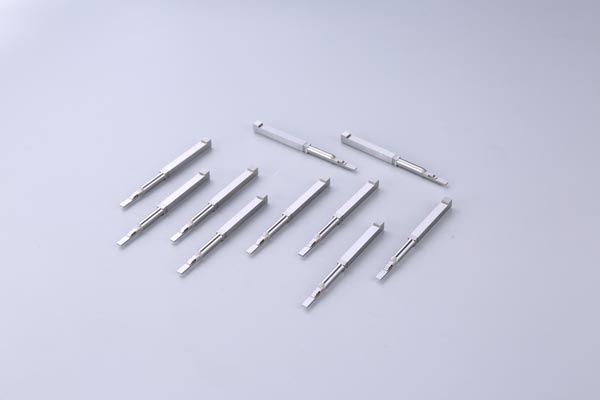
Tungsten carbide dies are engineered for extreme durability in high-stress industrial environments, delivering unmatched hardness, wear resistance, and thermal stability. As a global hub for precision tooling, Dongguan leverages advanced powder metallurgy, ultra-precision grinding, and ISO-classified production facilities to manufacture tungsten carbide dies that meet the rigorous demands of aerospace, automotive, electronics, and high-volume stamping industries.
These dies, composed of 80–90% tungsten carbide with cobalt binders, achieve hardness levels of 87–93 HRA and compressive strengths exceeding 4,500 MPa. Their microstructure is optimized through low-pressure sintering and HIP densification, ensuring minimal porosity and consistent performance under continuous high-frequency operation. Unlike conventional tool steels, tungsten carbide maintains dimensional integrity at elevated temperatures, resists abrasive wear over extended cycles, and reduces downtime through extended service life—often 5 to 10 times longer than standard alloy dies.
Our factory business: carbide parts, mold parts, medical injection molds, precision injection molds, teflon PFA injection molding, PFA tube fittings. email: [email protected],whatsapp:+8613302615729.
Manufacturers in Dongguan integrate full-process traceability, from raw material certification to final dimensional inspection using CMM and optical metrology, ensuring compliance with international standards for precision tooling. Custom geometries, micro-tolerances down to ±0.001 mm, and specialized surface finishes—including mirror polishing and PVD coatings—are routinely delivered to global clients seeking reliability in mass production.
FAQ
Q1: What is the typical service life of a tungsten carbide die compared to standard tool steel?
A: Tungsten carbide dies typically last 5 to 10 times longer than conventional tool steel dies under high-wear conditions such as cold stamping, extrusion, or high-speed punching, significantly reducing replacement frequency and operational downtime.
Q2: Can tungsten carbide dies be customized for non-standard part geometries?
A: Yes. Leading manufacturers in Dongguan offer full custom design and machining services, including complex 3D profiles, micro-channels, and threaded features, using CNC grinding, EDM, and laser machining to achieve tight tolerances on bespoke applications.
Q3: How is dimensional stability maintained during high-temperature operations?
A: Tungsten carbide exhibits minimal thermal expansion (CTE ≈ 4.5–5.5 × 10⁻⁶/°C) and retains hardness up to 900°C. Combined with stress-relieved sintering and precision grinding, this ensures consistent part dimensions even during prolonged thermal cycling.
Q4: What certifications accompany tungsten carbide dies for export markets?
A: Reputable suppliers provide material test reports (MTRs), hardness certificates, dimensional inspection reports, and RoHS/REACH compliance documentation to support global regulatory submissions and quality audits.
Q5: Why is surface finish critical in tungsten carbide dies for electronics applications?
A: In electronics manufacturing, mirror-polished surfaces (Ra ≤ 0.02 μm) prevent material adhesion, reduce friction during ejection, and eliminate micro-scratches that compromise component integrity—especially in fine-pitch stamping of connectors and battery foils.
Related Posts
- Safety Guidelines for Tungsten Carbide Dies in Industrial Applications
- Selecting Optimal Tungsten Carbide Mold Materials – Yize Mould’s Strategic Guidance
- Tungsten Carbide Dies: Industrial Applications and Performance Advantages
- Environmental Impact of Tungsten Carbide Dies: Sustainability and Responsible Management


 English
  Deutsch
  Français
  日本語
日本語  한국어
한국어  Español
  Português
  Italiano
  Nederlands
  Русский
  Bahasa Indonesia
  العربية