

The Complete Mining Carbide Parts Guide
Introduction Mining equipment operates under some of the most punishing conditions in industrial manufacturing: constant abrasion, heavy impact, mineral slurry, and thermal cycling. In this environment, tungsten carbide has established […]
Introduction
Mining equipment operates under some of the most punishing conditions in industrial manufacturing: constant abrasion, heavy impact, mineral slurry, and thermal cycling. In this environment, tungsten carbide has established itself as the benchmark material for wear-critical components. Mining carbide parts deliver a combination of extreme hardness, compressive strength, and toughness that conventional steels cannot match, which is why they are the standard choice for drilling, crushing, conveying, and slurry-handling applications worldwide.
This guide explains what mining carbide parts are, how they are manufactured, how to select the correct grade, and how to extend component service life while controlling total operating cost.
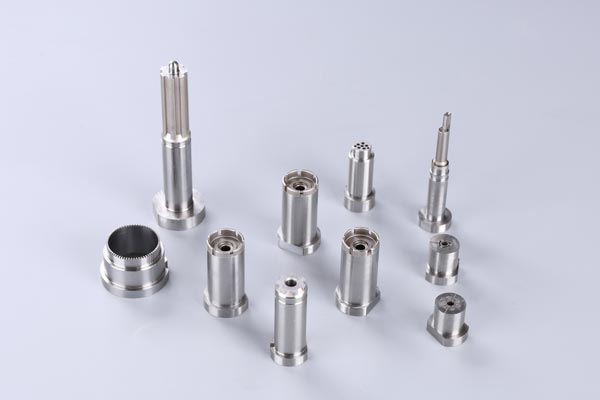
Our factory business: carbide parts, mold parts, medical injection molds, precision injection molds, teflon PFA injection molding, PFA tube fittings. email: [email protected],whatsapp:+8613302615729.
What Are Mining Carbide Parts?
Mining carbide parts are precision-engineered components made from tungsten carbide (WC) particles bonded by a metallic matrix, most commonly cobalt (Co). The result is a composite material with hardness typically ranging from 85 to 93 HRA (roughly 1,100 to 1,900 HV, depending on grade) and outstanding compressive strength, while the cobalt binder provides the toughness needed to absorb impact loads.
Because the material properties can be tuned by adjusting binder content, grain size, and sintering parameters, carbide components can be engineered for a specific mining duty: extreme abrasion resistance, repeated percussive impact, or a balance of both.
Core Mining Carbide Components
Mining carbide components appear across nearly every stage of the mining process:
- Drill bits and button bits – Used in top hammer, down-the-hole (DTH), and rotary drilling. Carbide buttons are pressed or brazed into bit bodies to deliver penetration speed and wear resistance in hard rock.
- Cutting picks – Fitted to roadheaders, longwall shearers, and trenchers, where carbide tips must withstand both abrasive rock and severe impact forces.
- Wear plates and liners – Protect chutes, hoppers, slurry pipes, and transfer points from abrasive ore flow, extending the life of structural steelwork.
- Crusher wear elements – Including hammer tips, breaker bars, and grizzly components, where carbide resists gouging abrasion and impact from coarse feed material.
- Slurry and pump components – Such as nozzles, valve seats, wear sleeves, and impeller inserts, which operate in high-velocity abrasive suspensions.
- Guides and stabilizers – Drill rod guides, reaming shells, and stabilizer pads that maintain hole direction and reduce rod vibration.
How Mining Carbide Parts Are Manufactured
Understanding the manufacturing route helps buyers evaluate quality and consistency. The standard process includes:
- Powder preparation – Tungsten carbide powder is blended with cobalt and other alloying elements, with precise control over grain size and binder distribution.
- Forming – The powder is compacted into green shapes by uniaxial pressing or cold isostatic pressing (CIP).
- Pre-sintering and green machining – Complex geometries are machined while the material is still soft, before full densification.
- Sintering – Components are sintered under vacuum at approximately 1,350 to 1,500°C, causing the cobalt to melt and bond the carbide grains into a dense structure.
- Hot isostatic pressing (HIP) – Optional HIP treatment eliminates residual porosity, raising density and improving impact resistance for the most demanding tools.
- Precision grinding and finishing – Critical dimensions, cutting edges, and seating surfaces are ground to tight tolerances.
- Inspection and quality control – Density, hardness, microstructure, and dimensional accuracy are verified against specification before dispatch.
Selecting the Right Grade: Hardness vs. Toughness
The most important decision in specifying mining carbide parts is grade selection, and it is always a trade-off between hardness and toughness.
- Higher cobalt content (8 to 12 percent) produces a tougher, more impact-resistant material, ideal for percussive drilling and heavy crushing loads.
- Lower cobalt content (6 percent and below) produces a harder, more abrasion-resistant grade, suited to sliding wear and non-impact applications.
- Grain size also matters. Coarse-grained carbide resists crack propagation under impact, while fine-grained carbide offers superior edge retention under abrasion.
For high-impact percussive drilling, choose coarse-grained grades with 8 to 10 percent cobalt. For abrasive wear in chutes, pipes, and slurry systems, a fine-grained grade with 6 percent cobalt delivers longer life. Where both abrasion and impact occur, ISO K-series grades with medium grain size and 7 to 9 percent cobalt are a proven compromise.
Coatings and Surface Treatments
Most mining carbide components operate uncoated because hard coatings such as CVD or PVD films can chip under high-impact loading. However, two treatments deserve attention:
- Anti-corrosion binder systems – Replacing some or all of the cobalt with nickel-chromium improves resistance to corrosive and acidic mine water, where cobalt leaching can accelerate wear.
- Diamond-enhanced surfaces – For non-impact, purely abrasive applications, diamond coatings or polycrystalline diamond (PCD) inserts can dramatically extend service life, though they are unsuitable for shock loading.
Common Failure Modes and How to Prevent Them
Even high-quality carbide fails prematurely when it is misapplied. The most common failure modes are:
- Abrasive wear – Progressive loss of material, usually a sign that the grade is too soft or the operating speed is too high.
- Impact fracture and chipping – Crack initiation at the cutting edge, typically caused by a grade that is too hard or brittle for the impact energy involved.
- Thermal fatigue – Surface cracking from rapid heating and cooling, common in dry drilling and cutting applications with poor cooling.
- Binder leaching and corrosion – Cobalt removal by acidic water, which weakens the structure and accelerates grain loss.
Prevention starts with correct grade selection, followed by proper retention methods (brazing quality, interference fits, or mechanical locking), controlled operating parameters, and adequate coolant delivery where applicable.
Extending Service Life
Mining carbide parts are a consumable cost, but their lifecycle cost can be managed:
- Rotate components to distribute wear evenly across the set.
- Inspect regularly and replace or re-tip before catastrophic failure damages the tool body.
- Use reconditioning services – Worn button bits and picks can often be re-tipped or re-brazed with new carbide inserts at a fraction of the cost of new tools.
- Match operating parameters – Feed rate, rotation speed, and thrust should be tuned to the tool geometry and rock conditions.
Choosing a Reliable Mining Carbide Parts Supplier
Because component quality directly affects drilling rate, downtime, and safety, supplier selection is as critical as grade selection. Evaluate suppliers on:
- Material certification – Verified composition, density, hardness, and microstructure reports for every batch.
- Dimensional capability – Tight tolerances on seating surfaces and cutting geometries, confirmed by inspection records.
- Quality systems – ISO 9001 certification and documented process control across pressing, sintering, and grinding.
- Application support – Engineering input on grade selection, failure analysis, and tool redesign based on your specific rock and equipment conditions.
- Supply reliability – Consistent lead times and batch-to-batch repeatability to keep mining operations running.
FAQ
Q1: What are mining carbide parts made of? They are made of tungsten carbide particles bonded with a metallic binder, most commonly cobalt. The ratio of carbide to binder, along with grain size, determines hardness, toughness, and the right application.
Q2: Which carbide grade is best for hard rock drilling? For percussive hard rock drilling, a coarse-grained grade with roughly 8 to 10 percent cobalt offers the best balance of impact toughness and wear resistance. Softer, more abrasive conditions may favor a lower-cobalt, harder grade.
Q3: Why does toughness matter more than hardness for percussive tools? Percussive drilling subjects the carbide to repeated shock loads. If the grade is too hard and brittle, the tool chips and fractures; sufficient toughness allows it to absorb impact energy while still resisting abrasive wear.
Q4: Can worn mining carbide components be repaired? Yes. Worn button bits, picks, and cutting tools can often be re-tipped or re-brazed with new carbide inserts. Reconditioning is typically more cost-effective than full replacement when the tool body remains in good condition.
Q5: How can I tell a quality carbide part from a cheap one? Request material certification, verify density and hardness, and inspect microstructure consistency. Reputable suppliers provide full inspection records and demonstrate batch-to-batch repeatability, while poor-quality parts typically show porosity, inconsistent hardness, and short, unpredictable service life.
Q6: Are mining carbide parts suitable for corrosive mine environments? Standard cobalt-bonded grades can suffer binder leaching in acidic water. In such conditions, nickel-chromium binder systems or alternative corrosion-resistant grades are recommended.
Related Posts
- Carbide Wear Parts Applications: A Complete Guide for Industrial Buyers
- Carbide Grinding: The Complete Guide to Precision-Grinding Tungsten Carbide Components
- Carbide EDM Machining: Precision Electrical Discharge Machining for Tungsten Carbide Parts
- CNC Machining Tungsten Carbide: Precision Solutions for Industrial Excellence



 English
 Deutsch
 Français
 日本語
 한국어
 Español
 Português
 Italiano
 Nederlands
 Русский
 Bahasa Indonesia
 العربية